AI workflow automation is transforming how businesses operate.
Instead of spending hours on repetitive tasks, companies are increasingly using automation platforms to handle routine processes automatically. Modern tools can connect apps, move data, send notifications, generate content, and even make decisions using artificial intelligence.
The result is faster operations, fewer mistakes, and improved productivity.
Whether you’re a small business owner, agency manager, or enterprise leader, understanding how AI workflow automation works can help you identify opportunities to save time and reduce costs.
In this guide, we’ll explore 15 real-world AI workflow automation examples that businesses are using in 2026.
If you’re new to automation, start with our guide to AI Automation Tools.
What Is AI Workflow Automation?
AI workflow automation combines traditional workflow automation with artificial intelligence.
A workflow is a series of steps that complete a task. Automation software can perform these steps automatically. AI enhances the process by analyzing information, generating content, making recommendations, and handling tasks that previously required human input.
Examples include:
- Automatically responding to customer inquiries
- Summarizing meeting notes
- Qualifying leads
- Categorizing support tickets
- Generating reports
Businesses of all sizes are now using AI-powered workflows to improve efficiency.
For a broader overview, check our guide to AI Process Automation Tools.
Why Businesses Are Adopting AI Workflow Automation
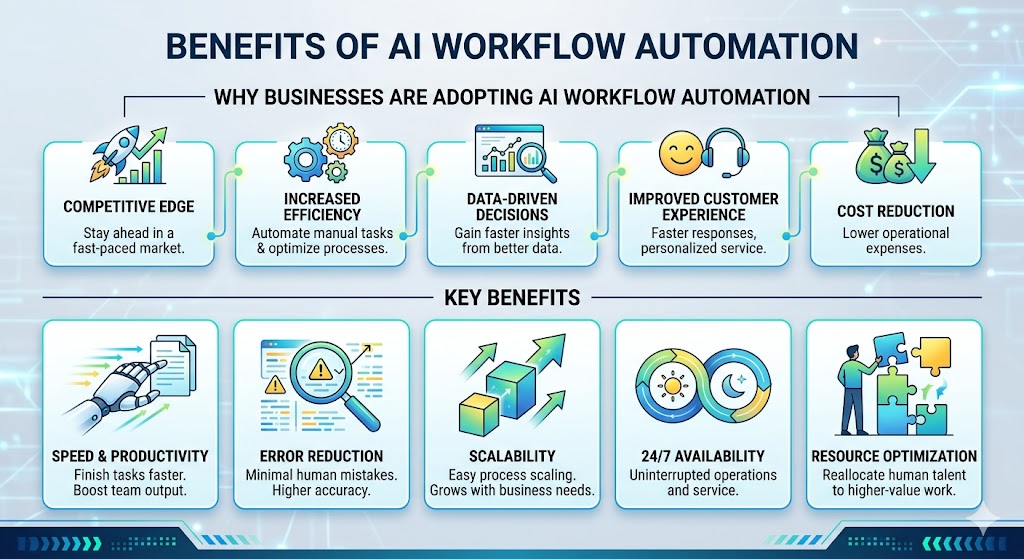
Companies are adopting automation because it offers several advantages.
Increased Productivity
Employees spend less time on repetitive tasks.
Reduced Human Error
Automated workflows complete tasks consistently.
Faster Operations
Work that previously took hours can be completed in seconds.
Lower Costs
Businesses can scale without hiring additional staff.
Better Customer Experience
Faster response times lead to higher customer satisfaction.
1. Lead Capture and Qualification
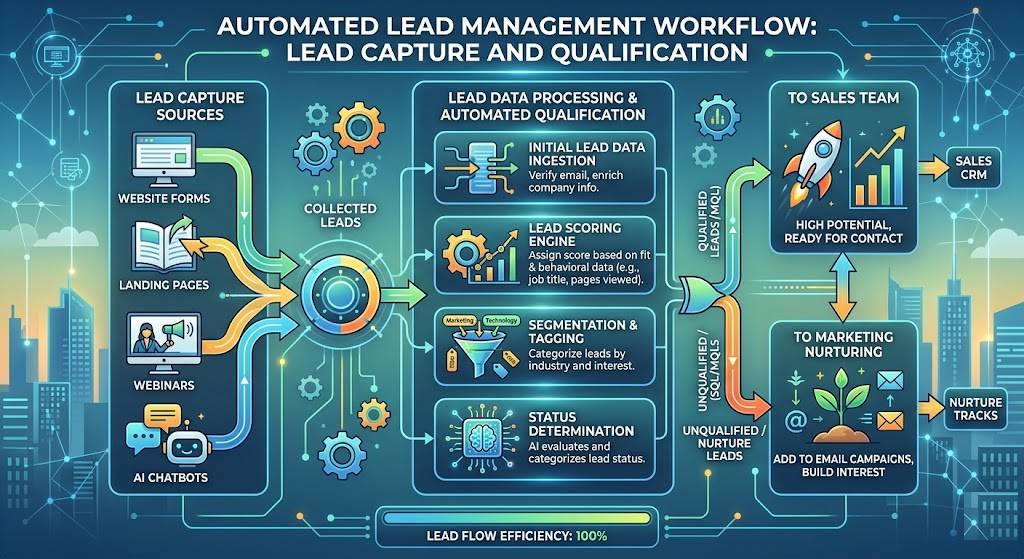
One of the most common workflow automation examples involves lead management.
When a prospect fills out a form on your website, automation software can:
- Capture contact information
- Create a CRM record
- Score the lead using AI
- Assign the lead to a sales representative
- Send a welcome email
This process happens automatically, ensuring no opportunities are missed.
2. Customer Support Ticket Routing
Customer support teams often receive large numbers of requests.
AI can analyze incoming messages and automatically:
- Categorize tickets
- Determine urgency
- Assign the correct department
- Send acknowledgment emails
This reduces response times and improves customer satisfaction.
3. AI-Powered Email Follow-Ups
Following up with leads manually can be time-consuming.
Automation software can:
- Trigger email sequences
- Personalize messages
- Schedule follow-ups
- Track responses
This ensures consistent communication without requiring manual effort.
4. Meeting Notes and Summaries
Many businesses spend significant time documenting meetings.
AI tools can automatically:
- Record conversations
- Generate summaries
- Extract action items
- Send follow-up notes
This saves time while ensuring important information is not missed.
5. Social Media Content Scheduling
Marketing teams frequently automate content publishing.
Workflows can:
- Generate content ideas
- Create captions
- Schedule posts
- Publish content automatically
This helps businesses maintain a consistent online presence.
6. Invoice Processing
Finance teams often use automation to process invoices.
AI can:
- Extract invoice data
- Verify information
- Route approvals
- Update accounting software
This significantly reduces administrative workload.
7. Employee Onboarding
Hiring new employees involves many repetitive tasks.
Automation workflows can:
- Send welcome emails
- Create accounts
- Assign training materials
- Schedule onboarding meetings
This creates a smoother experience for new hires.
8. E-Commerce Order Processing
Online stores can automate:
- Order confirmations
- Shipping notifications
- Inventory updates
- Customer communications
These workflows improve efficiency and customer experience.
9. CRM Data Management
Customer relationship management systems contain valuable business data.
Unfortunately, sales teams often spend significant time manually updating records.
AI workflow automation can:
- Update contact records automatically
- Log customer interactions
- Assign leads
- Trigger follow-up reminders
- Track sales pipeline activity
This ensures CRM data remains accurate while reducing administrative work.
10. Marketing Campaign Reporting
Marketing teams often spend hours collecting data from multiple platforms.
Automation software can automatically:
- Gather campaign metrics
- Generate reports
- Create summaries
- Distribute results to stakeholders
This allows marketers to focus on strategy instead of reporting.
11. Document Approval Workflows
Many organizations require approvals for:
- Contracts
- Purchase requests
- Budget changes
- Marketing assets
Automation workflows can route documents to the appropriate people, track approval status, and notify stakeholders automatically.
This improves efficiency while maintaining accountability.
12. Recruitment and Candidate Screening
Hiring teams often receive hundreds of applications.
AI-powered workflows can:
- Screen resumes
- Identify qualified candidates
- Schedule interviews
- Send status updates
This helps recruiters focus on top candidates rather than administrative tasks.
13. Inventory Management
Inventory management is a critical process for many businesses.
Automation software can:
- Monitor stock levels
- Generate alerts
- Trigger purchase orders
- Update inventory systems
This reduces stock shortages and improves operational efficiency.
14. Customer Feedback Analysis
Businesses receive feedback from:
- Surveys
- Reviews
- Support tickets
- Social media
AI workflows can automatically analyze feedback, identify trends, and generate summaries for decision-makers.
This provides valuable insights without requiring manual analysis.
15. Content Creation and Publishing
Content marketing is one of the fastest-growing applications of AI workflow automation.
Businesses can automate:
- Content ideation
- Research
- Draft generation
- Publishing workflows
- Social media promotion
These workflows help teams produce content more consistently and efficiently.
Which Automation Platform Should You Use?
The right platform depends on your goals and technical requirements.
Choose Relay.app If:
- You want AI-powered workflows
- You need collaboration features
- Ease of use is important
- Your team wants visual workflow management
Choose Zapier If:
- Integrations are your highest priority
- You use many third-party applications
Choose Make If:
- You need advanced workflow customization
- Complex automation is required
If you’re evaluating platforms, read our guide to Best Automation Software for Small Business.
You may also want to compare leading platforms in our AI Automation Platform guide.
AI Workflow Automation Examples by Department
| Department | Automation Example |
|---|---|
| Sales | Lead qualification |
| Marketing | Campaign reporting |
| Customer Support | Ticket routing |
| HR | Employee onboarding |
| Finance | Invoice processing |
| Operations | Inventory management |
| Management | Performance reporting |
As AI technology continues to improve, nearly every department can benefit from automation.
How to Get Started With Workflow Automation
Many businesses make the mistake of trying to automate everything at once.
Instead, start with a single repetitive process.
Examples include:
- Lead follow-ups
- Support ticket routing
- Invoice approvals
- Report generation
Once the first workflow is successful, additional automations can be added gradually.
For a deeper look at available solutions, check our guide to AI Process Automation Tools.
Frequently Asked Questions
What is AI workflow automation?
AI workflow automation combines workflow automation and artificial intelligence to automate business processes and reduce manual work.
What are some examples of workflow automation?
Examples include lead management, support ticket routing, invoice processing, employee onboarding, content creation, and marketing reporting.
Can small businesses benefit from AI workflow automation?
Yes. Small businesses often achieve significant time savings and productivity improvements through automation.
What is the best workflow automation platform?
Popular options include Relay.app, Zapier, Make, and Microsoft Power Automate. The best choice depends on your specific business needs.
Is workflow automation expensive?
Many automation platforms offer affordable plans for small businesses, making automation accessible even with limited budgets.
Final Verdict
AI workflow automation is no longer limited to large enterprises.
Businesses of all sizes are now using automation to streamline operations, reduce repetitive work, and improve productivity.
The examples in this guide demonstrate how automation can be applied across sales, marketing, customer support, finance, HR, and operations.
For many organizations, starting with just one workflow can create immediate benefits and build momentum for broader automation initiatives.
If you’re looking for a modern platform that combines workflow automation, collaboration, and AI-powered capabilities, Relay.app is one of the strongest options available in 2026.
Not sure if it’s the right fit? Read our full Relay App Review and Is Relay App Worth It? guides.