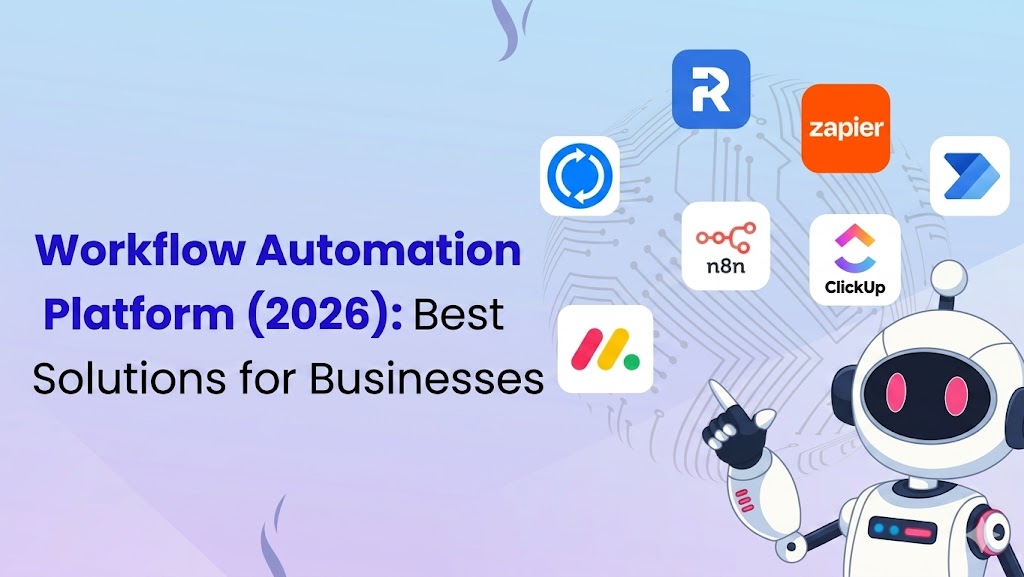
Workflow automation platforms help businesses automate repetitive tasks, streamline operations, and improve productivity.
Whether you’re managing sales pipelines, customer support workflows, marketing campaigns, or internal operations, the right automation platform can save hundreds of hours every year.
In this guide, we’ll compare the best workflow automation platforms available in 2026.
If you’re exploring AI-powered automation, start with our Best AI Automation Tools guide.
What Is a Workflow Automation Platform?
A workflow automation platform allows businesses to automate actions across applications and teams.
Typical examples include:
- Automatically assigning tasks
- Updating CRM records
- Sending notifications
- Processing approvals
- Creating reports
- Managing customer requests
Automation reduces manual work and improves operational efficiency.
Why Businesses Use Workflow Automation Platforms
Save Time
Automation eliminates repetitive tasks.
Improve Productivity
Employees can focus on strategic work.
Reduce Errors
Automated workflows improve consistency.
Improve Collaboration
Teams stay aligned through automated processes.
Scale Operations
Businesses can handle larger workloads efficiently.
How We Evaluated These Platforms
We ranked each solution based on:
- Ease of use
- Workflow flexibility
- AI capabilities
- Integrations
- Pricing
- Scalability
1. Relay.app

Relay.app is one of the best workflow automation platforms for modern businesses.
The platform combines AI-powered automation with human approval workflows.
Best For
- Small businesses
- Marketing teams
- Operations teams
- AI workflows
Pros
- Easy visual builder
- AI integrations
- Human-in-the-loop automation
- Fast deployment
Cons
- Smaller integration ecosystem than Zapier
Read our complete Relay.app Review.
Rating
⭐⭐⭐⭐⭐
2. Zapier

Zapier remains one of the most widely used workflow automation platforms worldwide.
Best For
- Beginners
- SaaS businesses
- App integrations
Rating
⭐⭐⭐⭐⭐
3. Make
Make offers advanced workflow automation and highly customizable workflows.
Best For
- Advanced users
- Complex automation
Rating
⭐⭐⭐⭐⭐
4. Microsoft Power Automate
Best For
- Enterprise organizations
- Microsoft ecosystem users
Rating
⭐⭐⭐⭐☆
5. n8n
Best For
- Developers
- Open-source automation
Rating
⭐⭐⭐⭐☆
6. Monday.com
Best For
- Team management
- Workflow coordination
Rating
⭐⭐⭐⭐☆
7. ClickUp
Best For
- Project management
- Team productivity
Rating
⭐⭐⭐⭐☆
Workflow Automation Platform Comparison Table
| Platform | Best For | Ease of Use | AI Features | Integrations | Overall Rating |
|---|---|---|---|---|---|
| Relay.app | AI Workflows | ⭐⭐⭐⭐⭐ | ⭐⭐⭐⭐⭐ | ⭐⭐⭐⭐ | ⭐⭐⭐⭐⭐ |
| Zapier | Beginners | ⭐⭐⭐⭐⭐ | ⭐⭐⭐⭐ | ⭐⭐⭐⭐⭐ | ⭐⭐⭐⭐⭐ |
| Make | Advanced Automation | ⭐⭐⭐⭐ | ⭐⭐⭐⭐ | ⭐⭐⭐⭐⭐ | ⭐⭐⭐⭐⭐ |
| Power Automate | Microsoft Users | ⭐⭐⭐ | ⭐⭐⭐⭐ | ⭐⭐⭐⭐⭐ | ⭐⭐⭐⭐ |
| n8n | Developers | ⭐⭐⭐ | ⭐⭐⭐⭐ | ⭐⭐⭐⭐ | ⭐⭐⭐⭐ |
| Monday.com | Team Operations | ⭐⭐⭐⭐ | ⭐⭐⭐ | ⭐⭐⭐⭐ | ⭐⭐⭐⭐ |
| ClickUp | Project Management | ⭐⭐⭐⭐ | ⭐⭐⭐ | ⭐⭐⭐⭐ | ⭐⭐⭐⭐ |
Which Workflow Automation Platform Is Best?
The best platform depends on your business needs.
Best Overall
Relay.app
Relay.app offers one of the strongest combinations of usability, AI-powered workflows, and business automation capabilities.
Best for Beginners
Zapier
Easy setup and a massive integration ecosystem make Zapier ideal for newcomers.
Best for Advanced Users
Make
Perfect for businesses that need sophisticated workflow logic and customization.
Best for Enterprise Organizations
Microsoft Power Automate
A strong choice for organizations already using Microsoft products.
Best Open-Source Platform
n8n
Excellent for technical teams seeking flexibility and control.
Common Workflow Automation Platform Use Cases
Sales Automation
Automate:
- Lead capture
- CRM updates
- Follow-up emails
- Meeting scheduling
Marketing Automation
Automate:
- Email marketing
- Lead nurturing
- Campaign reporting
- Content distribution
Customer Support Automation
Automate:
- Ticket routing
- FAQ responses
- Customer notifications
- Feedback collection
HR Automation
Automate:
- Employee onboarding
- Training assignments
- Approval workflows
- Document collection
Read our Process Automation Tools guide.
Workflow Automation Platform vs Automation Tools
Many businesses use these terms interchangeably.
Workflow Automation Platforms
Designed specifically to automate workflows across applications and teams.
Examples:
- Relay.app
- Zapier
- Make
- Power Automate
Automation Tools
A broader category that includes:
- Workflow automation
- Marketing automation
- Sales automation
- Business process automation
Learn more in our Automation Tools guide.
Why AI Is Improving Workflow Automation
Artificial intelligence is making workflow automation smarter.
Modern AI-powered platforms can:
- Summarize information
- Generate content
- Categorize requests
- Prioritize tasks
- Recommend actions
These capabilities allow businesses to automate increasingly complex processes.
For a deeper look at AI-powered workflows, read our AI Business Process Automation guide.
Frequently Asked Questions
What is a workflow automation platform?
A workflow automation platform helps businesses automate tasks and workflows using triggers, actions, integrations, and AI.
Which workflow automation platform is best?
Relay.app, Zapier, and Make are among the strongest options available in 2026.
Do workflow automation platforms require coding?
No. Most modern platforms provide visual no-code workflow builders.
Can small businesses use workflow automation platforms?
Absolutely. Small businesses often gain significant productivity improvements from automation.
Is workflow automation worth it?
Yes. Automation can reduce costs, improve efficiency, and help businesses scale faster.
Final Verdict
Workflow automation platforms have become essential for businesses looking to improve efficiency and streamline operations.
Whether you’re automating sales, marketing, HR, customer support, or internal workflows, the right platform can save time and reduce manual work.
For most businesses, Relay.app stands out as one of the best workflow automation platforms in 2026 because of its AI-powered workflows, ease of use, and flexibility.
Businesses that prioritize integrations may prefer Zapier, while advanced users may benefit from Make.
Start by automating a single workflow, then expand automation across your organization as your needs grow.