Businesses are constantly looking for ways to improve efficiency, reduce costs, and eliminate repetitive work. Whether you’re managing customer support, processing invoices, updating CRM records, or handling internal approvals, manual processes can quickly become a bottleneck.
This is where AI process automation software comes in.
Modern automation platforms combine workflow automation with artificial intelligence to streamline business operations. Instead of relying on employees to perform repetitive tasks, businesses can automate processes and allow teams to focus on higher-value work.
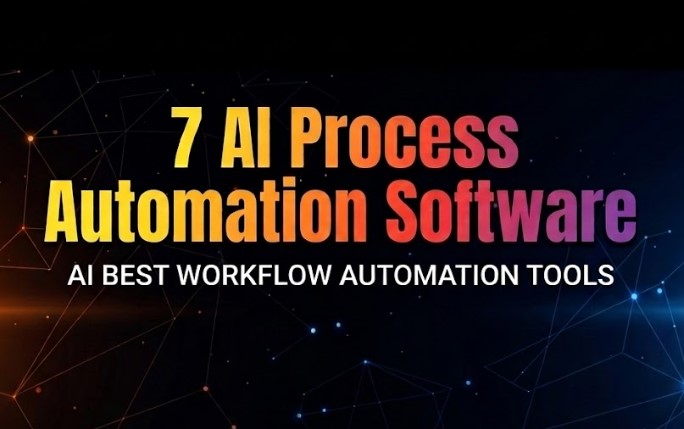
In this guide, we’ll compare the best AI process automation software solutions in 2026, including their features, pros, cons, and ideal use cases.
If you’re new to automation, check our guide to AI Automation Tools.
What Is AI Process Automation Software?
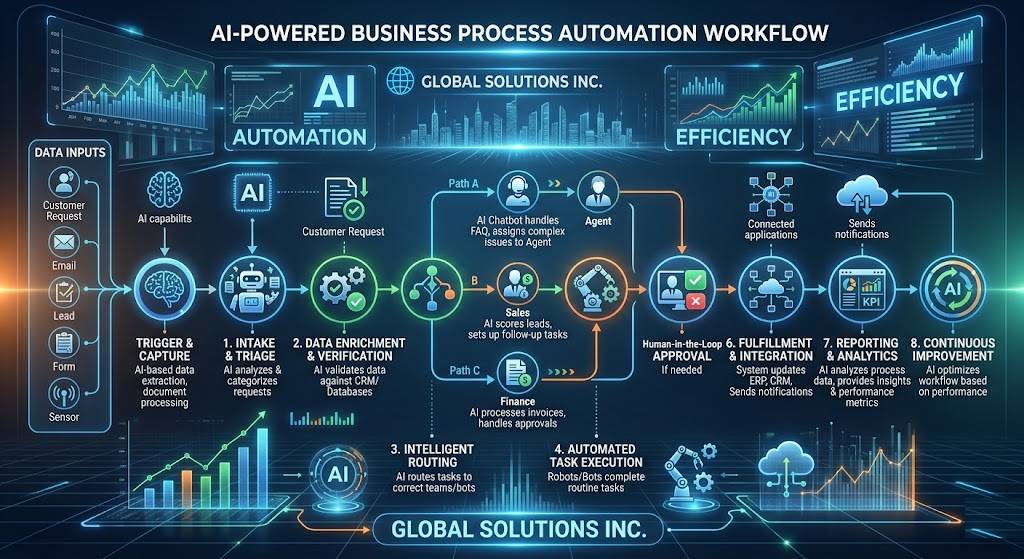
AI process automation software helps businesses automate repetitive workflows using triggers, rules, integrations, and artificial intelligence.
Examples include:
- Automatically routing support tickets
- Updating CRM records
- Sending follow-up emails
- Generating reports
- Processing invoices
- Managing employee onboarding
- Synchronizing data across applications
Unlike traditional automation tools, AI-powered platforms can analyze information, summarize content, classify data, and make intelligent decisions before triggering actions.
As AI technology continues to improve, automation software is becoming a critical part of modern business operations.
Looking for a broader overview of automation solutions? Check our guide to AI Process Automation Tools to explore additional platforms and use cases.
Why Businesses Are Investing in Process Automation
[CHÈN ẢNH: team using workflow automation software]
Alt text: benefits of process automation software
Businesses invest in automation software because it delivers measurable benefits.
Key advantages include:
Increased Productivity
Employees spend less time on repetitive tasks and more time on strategic work.
Reduced Human Error
Automated workflows eliminate many manual mistakes that occur when handling data or moving information between systems.
Faster Operations
Tasks that once took hours can often be completed in seconds.
Lower Operating Costs
Automation reduces the need for manual labor and improves efficiency.
Better Customer Experience
Automated responses and faster processes lead to higher customer satisfaction.
For many organizations, automation software quickly pays for itself through time savings alone.
1. Relay.app

Relay.app is one of the most modern workflow automation platforms available today.
Designed with simplicity in mind, Relay combines automation, collaboration, and AI-powered workflow steps in a beginner-friendly interface.
Key Features
- Visual workflow builder
- AI-powered automation actions
- Human approval steps
- Team collaboration
- Gmail integration
- Slack integration
- Notion integration
- Multi-step workflows
Pros
- Easy to use
- Excellent workflow visualization
- Strong AI capabilities
- Great for teams
Cons
- Fewer integrations than Zapier
- Smaller ecosystem
Best For
Small businesses, agencies, startups, and teams looking for AI-powered workflow automation.
Read our full Relay App Review.
2. Zapier

Zapier remains one of the largest automation platforms on the market.
Its biggest advantage is its massive integration ecosystem, allowing users to connect thousands of applications without coding.
Key Features
- Thousands of app integrations
- Multi-step workflows
- AI-powered automation
- Webhooks
- API support
Pros
- Huge integration library
- Reliable platform
- Easy setup
Cons
- Can become expensive
- Advanced workflows may require higher plans
Best For
Businesses that rely on a large number of third-party applications.
Looking for alternatives? Check our guide to Best Zapier Alternatives.
3. Make

Make is a powerful workflow automation platform that offers more flexibility than many competitors.
Its visual scenario builder allows users to create highly customized workflows.
Key Features
- Visual workflow builder
- Advanced logic
- Data transformation tools
- API integrations
- Scheduling tools
Pros
- Highly flexible
- Competitive pricing
- Strong automation capabilities
Cons
- Learning curve for beginners
Best For
Power users and technical teams.
Compare the platforms in our Relay App vs Make guide.
4. Microsoft Power Automate
Microsoft Power Automate is designed for businesses already using Microsoft 365 products.
Key Features
- Microsoft ecosystem integration
- Cloud workflows
- Desktop automation
- AI Builder
- Enterprise security
Pros
- Excellent Microsoft integration
- Enterprise-grade security
- Strong support
Cons
- Can be complex
- Less intuitive for beginners
Best For
Organizations heavily invested in Microsoft’s ecosystem.
5. UiPath

UiPath is one of the leaders in robotic process automation (RPA).
The platform is widely used by enterprises to automate large-scale business operations.
Key Features
- Robotic process automation
- AI document processing
- Enterprise workflow management
- Process mining
Pros
- Enterprise-ready
- Highly scalable
- Advanced automation capabilities
Cons
- Expensive
- More complex than SMB-focused tools
Best For
Large enterprises.
6. Workato
Workato combines workflow automation, integrations, and AI-powered processes.
It is popular among growing companies that need advanced automation without building everything from scratch.
Pros
- Strong integrations
- Enterprise features
- AI capabilities
Cons
- Premium pricing
Best For
Mid-sized and enterprise businesses.
7. Automation Anywhere
Automation Anywhere focuses on enterprise automation and robotic process automation.
Pros
- Enterprise-grade platform
- AI-powered automation
- Strong governance features
Cons
- Expensive for smaller businesses
Best For
Large organizations managing complex workflows.
AI Process Automation Software Comparison
| Tool | Best For | Ease of Use | AI Features |
|---|---|---|---|
| Relay.app | Small businesses | Excellent | Strong |
| Zapier | Integrations | Excellent | Good |
| Make | Advanced workflows | Medium | Good |
| Power Automate | Microsoft users | Medium | Good |
| UiPath | Enterprise RPA | Medium | Strong |
| Workato | Growing companies | Medium | Strong |
| Automation Anywhere | Enterprise automation | Medium | Strong |
Which AI Process Automation Software Is Best?
The right platform depends on your business needs.
Choose Relay.app if:
- You want simplicity
- You need AI workflow automation
- You value collaboration
Choose Zapier if:
- You need the largest integration ecosystem
Choose Make if:
- You want advanced workflow customization
Choose UiPath or Automation Anywhere if:
- You need enterprise-level automation
You may also like our guide to AI Workflow Software Comparison.
Frequently Asked Questions
What is AI process automation software?
AI process automation software automates repetitive business tasks using workflows, integrations, and artificial intelligence.
What is the best AI process automation software?
Popular options include Relay.app, Zapier, Make, UiPath, and Workato.
Is process automation software worth it?
Yes. Businesses often save significant time and reduce errors by automating repetitive workflows.
Can small businesses use automation software?
Absolutely. Many modern automation tools are designed specifically for small businesses and startups.
Final Verdict
AI process automation software has become essential for modern businesses.
The right platform can help teams reduce repetitive work, improve efficiency, and scale operations without increasing headcount.
While enterprise organizations may prefer solutions like UiPath or Automation Anywhere, many small and mid-sized businesses will find that Relay.app offers one of the best combinations of ease of use, AI capabilities, and workflow flexibility.
If you’re looking for a modern automation platform in 2026, Relay.app is a great place to start.
Read our guide on Is Relay App Worth It?