Workflow automation helps businesses eliminate repetitive tasks, improve efficiency, and reduce human error. Whether you’re a freelancer, small business owner, or enterprise team, automating routine workflows can save hours every week while improving consistency across your operations.
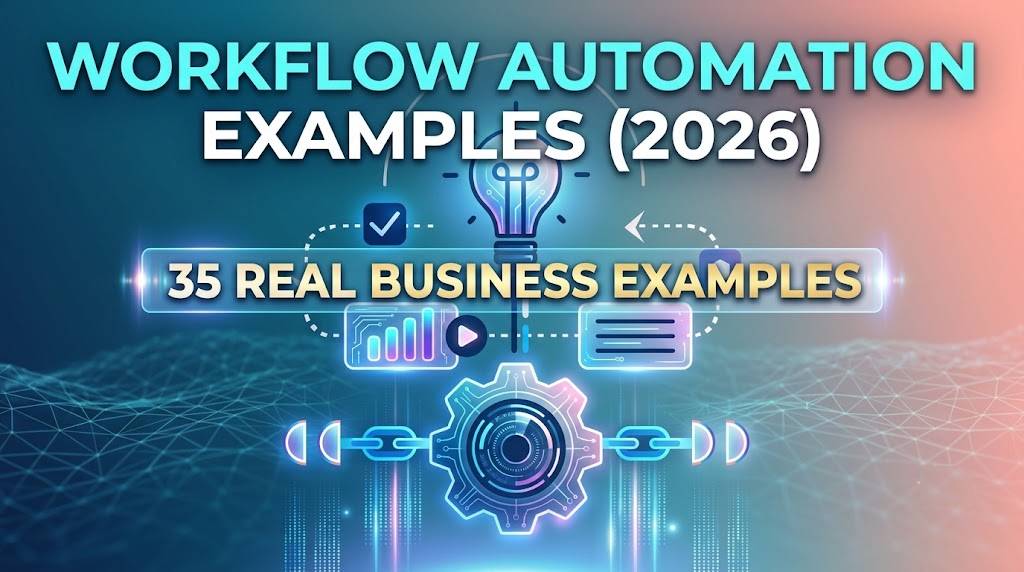
In this guide, we’ve compiled 35 real workflow automation examples across sales, marketing, HR, finance, customer support, and operations to help you discover practical ways to automate your business.
If you’re looking for the best platforms to build these workflows, check out our Best Workflow Automation Software guide.
How We Selected These Workflow Automation Examples
To create this guide, we analyzed the most common workflow automation use cases used by businesses of all sizes.
Our examples cover everyday business operations across sales, marketing, customer support, HR, finance, operations, and ecommerce. We selected workflows that are practical, easy to implement, and capable of saving businesses significant time while reducing manual work.
Whether you’re a startup looking to automate repetitive tasks or a growing company building more efficient processes, these examples provide ideas you can start using today.
Workflow Automation Examples at a Glance
| Category | Example |
|---|---|
| Sales | Lead assignment |
| Sales | CRM updates |
| Marketing | Welcome email sequence |
| Marketing | Social media scheduling |
| Customer Support | Auto-ticket routing |
| Customer Support | AI chatbot responses |
| HR | Employee onboarding |
| HR | Leave request approvals |
| Finance | Invoice approvals |
| Finance | Expense reimbursement |
| Operations | Inventory alerts |
| Operations | Purchase approvals |
What Is Workflow Automation?
Workflow automation is the process of using software to automatically complete repetitive tasks based on predefined rules.
Instead of manually moving information between applications or assigning tasks to team members, workflow automation tools perform these actions automatically.
For example:
- A customer submits a contact form.
- The lead is automatically added to your CRM.
- A sales representative is assigned.
- A welcome email is sent.
- A Slack notification alerts your sales team.
This entire process happens automatically without manual intervention.
If you’re new to automation, our Workflow Automation Tools guide explains the best software available today.
Sales Workflow Automation Examples
1. Automatically Assign New Leads
When a prospect submits a website form, automatically assign the lead to the correct salesperson based on territory, company size, or product interest.
Benefits:
- Faster response time
- Balanced lead distribution
- Improved conversion rates
2. Create CRM Records Automatically
Instead of entering customer information manually, automation tools can instantly create or update CRM records whenever new leads arrive.
Popular integrations:
- HubSpot
- Salesforce
- Pipedrive
- Zoho CRM
3. Send Follow-Up Emails
Automatically send personalized follow-up emails after:
- Demo requests
- Ebook downloads
- Webinar registrations
- Contact form submissions
This helps businesses nurture leads without manual effort.
4. Notify Sales Teams Instantly
Whenever a high-value lead enters your pipeline, automatically notify your sales team through Slack, Microsoft Teams, or email.
This reduces response time and increases the chances of closing deals.
5. Update Deal Stages Automatically
As customers complete specific actions, workflow automation can automatically move deals between sales pipeline stages.
Examples include:
Customer onboarded
Proposal sent
Contract signed
Payment received
Marketing Workflow Automation Examples
6. Welcome Email Automation
Automatically send a personalized welcome email whenever a new customer subscribes to your newsletter, creates an account, or downloads a lead magnet.
Benefits:
- Better first impressions
- Higher engagement
- Increased conversion rates
7. Lead Nurturing Campaigns
Instead of manually following up with every prospect, automation software can send a series of emails based on customer behavior.
Examples include:
- Ebook download
- Webinar registration
- Free trial signup
- Product page visits
8. Social Media Scheduling
Automatically publish posts across multiple social media platforms according to a predefined content calendar.
Popular tools can also recycle evergreen content to maximize reach.
Benefits:
- Consistent posting
- Time savings
- Better audience engagement
9. Lead Scoring
Assign scores automatically based on customer behavior.
For example:
- Opens an email (+5)
- Visits pricing page (+20)
- Downloads a case study (+15)
- Requests a demo (+40)
Once a lead reaches a predefined score, the sales team receives an automatic notification.
10. Customer Segmentation
Workflow automation software can automatically categorize contacts based on:
- Industry
- Company size
- Purchase history
- Geographic location
- Website behavior
This enables highly personalized marketing campaigns.
Ready to automate your marketing workflows?
[BUTTON TEXT: Try Relay.app Free]
AFF LINK
Customer Support Workflow Automation Examples
11. Automatic Ticket Routing
Support requests can be automatically assigned to the appropriate department based on keywords, product type, or customer priority.
Benefits:
- Faster response times
- Better customer experience
- Reduced manual triage
12. AI Chatbot Responses
Modern automation platforms integrate AI chatbots that answer common customer questions instantly before escalating complex issues to human agents.
13. Customer Satisfaction Surveys
Automatically send CSAT or NPS surveys after a support ticket is resolved.
Businesses can collect valuable customer feedback without manual follow-up.
14. Escalate High-Priority Tickets
Critical support tickets can automatically notify senior agents or managers through Slack, Microsoft Teams, or email.
This ensures urgent issues receive immediate attention.
15. Knowledge Base Suggestions
When customers submit support requests, AI can automatically recommend relevant knowledge base articles before an agent gets involved.
This reduces ticket volume while improving customer satisfaction.
If you’re interested in building AI-powered customer support workflows, explore our AI Workflow Automation Tools guide.
HR Workflow Automation Examples
16. Employee Onboarding
Automatically create onboarding tasks whenever a new employee joins your company.
Typical workflow:
- Create employee account
- Send welcome email
- Assign training materials
- Schedule orientation meeting
- Notify IT department
This reduces administrative work while ensuring every employee follows the same onboarding process.
17. Leave Request Approvals
Employees submit leave requests through an online form.
The workflow automatically:
- Notifies managers
- Approves or rejects requests
- Updates the HR system
- Adds leave to the company calendar
Benefits:
- Faster approvals
- Less paperwork
- Improved HR efficiency
18. Employee Performance Reviews
Instead of manually tracking review dates, workflow automation can:
- Send reminders
- Generate review forms
- Notify managers
- Collect employee feedback
- Store completed evaluations
19. Recruitment Automation
Automatically manage hiring workflows by:
- Collecting job applications
- Screening resumes
- Scheduling interviews
- Sending interview reminders
- Updating applicant status
This significantly reduces recruitment time.
20. Training Assignment
When employees join a specific department, automation software can automatically assign relevant training courses.
Examples include:
- Sales onboarding
- Compliance training
- Cybersecurity awareness
- Product knowledge
Ready to automate HR processes?
Finance Workflow Automation Examples
21. Invoice Approval
Instead of approving invoices manually through email, businesses can automatically route invoices to the appropriate managers based on amount or department.
Benefits:
- Faster approvals
- Reduced delays
- Better financial control
22. Expense Reimbursement
Employees upload receipts through a form.
Automation then:
- Validates submissions
- Notifies managers
- Approves expenses
- Updates accounting software
- Sends payment confirmation
23. Payment Reminders
Automatically send reminders before invoices become overdue.
Businesses can reduce late payments without manually contacting customers.
Examples:
- 7 days before due date
- Due date reminder
- 3 days overdue
- Final payment notice
24. Financial Reporting
Generate weekly or monthly reports automatically by collecting data from:
- Accounting software
- CRM
- Payment platforms
- Ecommerce systems
Reports can be emailed directly to managers.
25. Purchase Request Approval
Employees submit purchase requests through an online form.
Workflow automation automatically:
- Routes requests to managers
- Checks budget limits
- Requests additional approval if necessary
- Creates purchase orders
- Notifies finance once approved
For businesses looking to automate approvals and financial workflows, read our Business Automation Software guide.
Operations Workflow Automation Examples
26. Inventory Low Stock Alerts
Automatically notify your purchasing team when inventory drops below a predefined threshold.
This workflow helps prevent stock shortages and improves inventory management.
Benefits:
- Avoid stockouts
- Faster replenishment
- Better customer satisfaction
27. Purchase Order Creation
Once inventory reaches a minimum level, workflow automation can automatically generate purchase orders and send them to suppliers for approval.
This reduces manual purchasing tasks and speeds up procurement.
28. Vendor Approval Workflow
Instead of approving vendors through emails, businesses can automate the process by routing applications through legal, finance, and procurement departments.
Typical workflow:
- Vendor submits application
- Compliance review
- Finance approval
- Procurement approval
- Vendor added to ERP
29. Contract Renewal Reminders
Automatically notify responsible teams before contracts expire.
Examples:
- 90 days before expiration
- 30 days reminder
- 7 days reminder
This helps businesses avoid missed renewals.
30. Daily Operations Reports
Generate and distribute operational reports automatically every morning.
Reports may include:
- Sales performance
- Inventory levels
- Customer tickets
- Revenue
- Team productivity
Managers receive reports without manual preparation.
Ecommerce Workflow Automation Examples
31. Order Confirmation Emails
Automatically send confirmation emails immediately after customers place an order.
The workflow can include:
- Order summary
- Estimated delivery date
- Tracking information
- Support contact details
32. Abandoned Cart Recovery
If customers leave items in their shopping cart without completing checkout, automation software can send reminder emails to encourage them to return.
Benefits:
- Increased sales
- Higher conversion rates
- Reduced cart abandonment
33. Shipping Notifications
Automatically update customers whenever an order changes status.
Examples include:
- Order packed
- Order shipped
- Out for delivery
- Delivered
This improves the customer experience while reducing support inquiries.
34. Product Review Requests
Several days after delivery, customers automatically receive an email asking them to leave a product review.
Benefits:
- More customer reviews
- Better social proof
- Improved SEO for ecommerce stores
35. Customer Loyalty Rewards
Reward repeat customers automatically based on predefined conditions.
Examples:
- Fifth purchase
- Spending over $500
- Birthday discounts
- VIP membership upgrades
Automation software can issue coupons, loyalty points, or exclusive offers without manual intervention.
Tips for Successful Workflow Automation
Before automating any workflow:
- Start with repetitive tasks.
- Choose software that integrates with your existing tools.
- Test workflows before deploying them.
- Monitor automation performance regularly.
- Optimize workflows as your business grows.
Best Workflow Automation Software for These Examples
Choosing the right workflow automation platform depends on your business size, budget, and technical requirements.
Here’s our recommendation:
Relay.app
Best for small and medium-sized businesses looking for AI-powered workflow automation with an intuitive interface.
Best for:
- Marketing
- Sales
- HR
- Operations
Read our Relay.app Review.
Zapier
Best for businesses needing thousands of integrations with minimal setup.
Make
Best for advanced visual workflows and complex automation scenarios.
Microsoft Power Automate
Best for organizations already using Microsoft 365.
n8n
Best for developers who want maximum flexibility and self-hosting.
Final Thoughts
Workflow automation isn’t just about saving time—it’s about building more efficient, scalable, and consistent business processes.
Whether you’re automating sales, marketing, HR, finance, operations, or ecommerce, implementing the right workflows allows your team to focus on higher-value work while reducing repetitive manual tasks.
For most small and medium-sized businesses, Relay.app is our top recommendation thanks to its AI-powered workflow builder, intuitive interface, and excellent balance of flexibility and ease of use.
Ready to automate your business?
If you’re still comparing platforms, read our Best Workflow Automation Software guide before making your decision.
Frequently Asked Questions
What is workflow automation?
Workflow automation is the use of software to automatically complete repetitive business tasks based on predefined rules, reducing manual work and improving efficiency.
What are the best workflow automation tools?
Popular workflow automation tools include Relay.app, Zapier, Make, Microsoft Power Automate, n8n, Workato, Activepieces, and Pabbly Connect.
Which departments benefit most from workflow automation?
Almost every department can benefit, including sales, marketing, customer support, HR, finance, operations, procurement, and ecommerce.
Is workflow automation suitable for small businesses?
Yes. Many affordable workflow automation platforms are designed specifically for small businesses and require little or no coding experience.
For recommendations, see our Best Automation Software for Small Business guide.
What’s the difference between workflow automation and business process automation?
Workflow automation focuses on automating individual tasks and workflows, while business process automation automates complete business operations involving multiple departments.
Learn more in our AI Business Process Automation guide.