


Automation

Home AI Tools Automation Page 2
Best AI automation tools to streamline workflows, reduce repetitive tasks, and improve efficiency.

AI Workflow Automation Examples: 15 Real-World Use Cases (2026)

0
AI Workflow Automation Examples

AI workflow automation is transforming how businesses operate.

Instead of spending hours on repetitive tasks, companies are increasingly using automation platforms to handle routine processes automatically. Modern tools can connect apps, move data, send notifications, generate content, and even make decisions using artificial intelligence.

The result is faster operations, fewer mistakes, and improved productivity.

Whether you’re a small business owner, agency manager, or enterprise leader, understanding how AI workflow automation works can help you identify opportunities to save time and reduce costs.

In this guide, we’ll explore 15 real-world AI workflow automation examples that businesses are using in 2026.

If you’re new to automation, start with our guide to AI Automation Tools.


What Is AI Workflow Automation?

AI workflow automation combines traditional workflow automation with artificial intelligence.

A workflow is a series of steps that complete a task. Automation software can perform these steps automatically. AI enhances the process by analyzing information, generating content, making recommendations, and handling tasks that previously required human input.

Examples include:

  • Automatically responding to customer inquiries
  • Summarizing meeting notes
  • Qualifying leads
  • Categorizing support tickets
  • Generating reports

Businesses of all sizes are now using AI-powered workflows to improve efficiency.

For a broader overview, check our guide to AI Process Automation Tools.


Why Businesses Are Adopting AI Workflow Automation
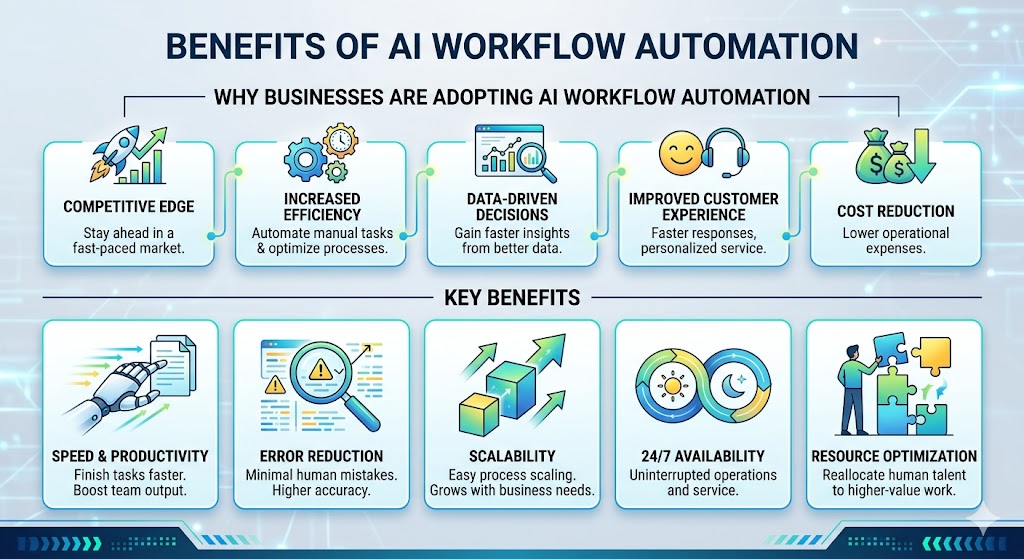
benefits of workflow automation

Companies are adopting automation because it offers several advantages.

Increased Productivity

Employees spend less time on repetitive tasks.

Reduced Human Error

Automated workflows complete tasks consistently.

Faster Operations

Work that previously took hours can be completed in seconds.

Lower Costs

Businesses can scale without hiring additional staff.

Better Customer Experience

Faster response times lead to higher customer satisfaction.


1. Lead Capture and Qualification
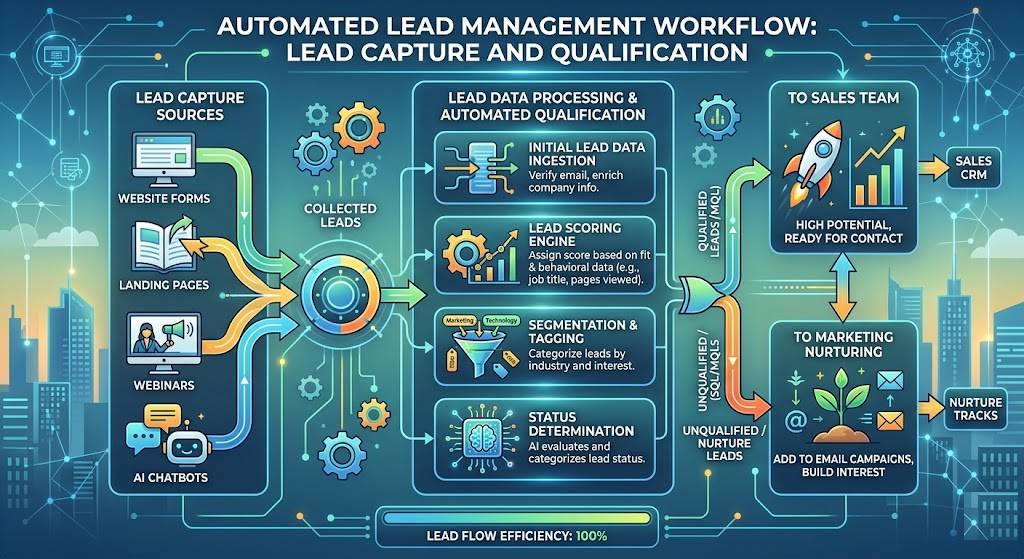
AI lead qualification workflow

One of the most common workflow automation examples involves lead management.

When a prospect fills out a form on your website, automation software can:

  • Capture contact information
  • Create a CRM record
  • Score the lead using AI
  • Assign the lead to a sales representative
  • Send a welcome email

This process happens automatically, ensuring no opportunities are missed.


2. Customer Support Ticket Routing

Customer support teams often receive large numbers of requests.

AI can analyze incoming messages and automatically:

  • Categorize tickets
  • Determine urgency
  • Assign the correct department
  • Send acknowledgment emails

This reduces response times and improves customer satisfaction.


3. AI-Powered Email Follow-Ups

Following up with leads manually can be time-consuming.

Automation software can:

  • Trigger email sequences
  • Personalize messages
  • Schedule follow-ups
  • Track responses

This ensures consistent communication without requiring manual effort.


4. Meeting Notes and Summaries

Many businesses spend significant time documenting meetings.

AI tools can automatically:

  • Record conversations
  • Generate summaries
  • Extract action items
  • Send follow-up notes

This saves time while ensuring important information is not missed.


5. Social Media Content Scheduling

Marketing teams frequently automate content publishing.

Workflows can:

  • Generate content ideas
  • Create captions
  • Schedule posts
  • Publish content automatically

This helps businesses maintain a consistent online presence.


6. Invoice Processing

Finance teams often use automation to process invoices.

AI can:

  • Extract invoice data
  • Verify information
  • Route approvals
  • Update accounting software

This significantly reduces administrative workload.


7. Employee Onboarding

Hiring new employees involves many repetitive tasks.

Automation workflows can:

  • Send welcome emails
  • Create accounts
  • Assign training materials
  • Schedule onboarding meetings

This creates a smoother experience for new hires.


8. E-Commerce Order Processing

Online stores can automate:

  • Order confirmations
  • Shipping notifications
  • Inventory updates
  • Customer communications

These workflows improve efficiency and customer experience.

9. CRM Data Management

Customer relationship management systems contain valuable business data.

Unfortunately, sales teams often spend significant time manually updating records.

AI workflow automation can:

  • Update contact records automatically
  • Log customer interactions
  • Assign leads
  • Trigger follow-up reminders
  • Track sales pipeline activity

This ensures CRM data remains accurate while reducing administrative work.


10. Marketing Campaign Reporting

Marketing teams often spend hours collecting data from multiple platforms.

Automation software can automatically:

  • Gather campaign metrics
  • Generate reports
  • Create summaries
  • Distribute results to stakeholders

This allows marketers to focus on strategy instead of reporting.


11. Document Approval Workflows

Many organizations require approvals for:

  • Contracts
  • Purchase requests
  • Budget changes
  • Marketing assets

Automation workflows can route documents to the appropriate people, track approval status, and notify stakeholders automatically.

This improves efficiency while maintaining accountability.


12. Recruitment and Candidate Screening

Hiring teams often receive hundreds of applications.

AI-powered workflows can:

  • Screen resumes
  • Identify qualified candidates
  • Schedule interviews
  • Send status updates

This helps recruiters focus on top candidates rather than administrative tasks.


13. Inventory Management

Inventory management is a critical process for many businesses.

Automation software can:

  • Monitor stock levels
  • Generate alerts
  • Trigger purchase orders
  • Update inventory systems

This reduces stock shortages and improves operational efficiency.


14. Customer Feedback Analysis

Businesses receive feedback from:

  • Surveys
  • Reviews
  • Support tickets
  • Social media

AI workflows can automatically analyze feedback, identify trends, and generate summaries for decision-makers.

This provides valuable insights without requiring manual analysis.


15. Content Creation and Publishing

Content marketing is one of the fastest-growing applications of AI workflow automation.

Businesses can automate:

  • Content ideation
  • Research
  • Draft generation
  • Publishing workflows
  • Social media promotion

These workflows help teams produce content more consistently and efficiently.


Which Automation Platform Should You Use?

The right platform depends on your goals and technical requirements.

Choose Relay.app If:

  • You want AI-powered workflows
  • You need collaboration features
  • Ease of use is important
  • Your team wants visual workflow management

Choose Zapier If:

  • Integrations are your highest priority
  • You use many third-party applications

Choose Make If:

  • You need advanced workflow customization
  • Complex automation is required

If you’re evaluating platforms, read our guide to Best Automation Software for Small Business.

You may also want to compare leading platforms in our AI Automation Platform guide.


AI Workflow Automation Examples by Department

DepartmentAutomation Example
SalesLead qualification
MarketingCampaign reporting
Customer SupportTicket routing
HREmployee onboarding
FinanceInvoice processing
OperationsInventory management
ManagementPerformance reporting

As AI technology continues to improve, nearly every department can benefit from automation.


How to Get Started With Workflow Automation

Many businesses make the mistake of trying to automate everything at once.

Instead, start with a single repetitive process.

Examples include:

  • Lead follow-ups
  • Support ticket routing
  • Invoice approvals
  • Report generation

Once the first workflow is successful, additional automations can be added gradually.

For a deeper look at available solutions, check our guide to AI Process Automation Tools.


Frequently Asked Questions

What is AI workflow automation?

AI workflow automation combines workflow automation and artificial intelligence to automate business processes and reduce manual work.

What are some examples of workflow automation?

Examples include lead management, support ticket routing, invoice processing, employee onboarding, content creation, and marketing reporting.

Can small businesses benefit from AI workflow automation?

Yes. Small businesses often achieve significant time savings and productivity improvements through automation.

What is the best workflow automation platform?

Popular options include Relay.app, Zapier, Make, and Microsoft Power Automate. The best choice depends on your specific business needs.

Is workflow automation expensive?

Many automation platforms offer affordable plans for small businesses, making automation accessible even with limited budgets.


Final Verdict

AI workflow automation is no longer limited to large enterprises.

Businesses of all sizes are now using automation to streamline operations, reduce repetitive work, and improve productivity.

The examples in this guide demonstrate how automation can be applied across sales, marketing, customer support, finance, HR, and operations.

For many organizations, starting with just one workflow can create immediate benefits and build momentum for broader automation initiatives.

If you’re looking for a modern platform that combines workflow automation, collaboration, and AI-powered capabilities, Relay.app is one of the strongest options available in 2026.

Not sure if it’s the right fit? Read our full Relay App Review and Is Relay App Worth It? guides.


Best Automation Software for Small Business (2026): 12 Tools Compared

3
Best Automation Software for Small Business

Running a small business often means wearing multiple hats. From managing leads and sending invoices to marketing, customer support, and team collaboration, repetitive tasks can quickly consume valuable time.

The best automation software helps small businesses streamline daily operations, reduce manual work, and improve productivity without hiring additional staff.

In this guide, we’ve compared the best automation software for small businesses in 2026 based on pricing, ease of use, AI capabilities, integrations, and overall value.

If you’re specifically looking for workflow automation platforms, check out our Best Workflow Automation Software guide.

Best Automation Software for Small Business Comparison

SoftwareBest ForAI FeaturesFree Plan
Relay.appAI workflow automation⭐⭐⭐⭐⭐
ZapierApp integrations⭐⭐⭐⭐☆
MakeVisual automation⭐⭐⭐⭐☆
HubSpotCRM & sales automation⭐⭐⭐⭐☆
Microsoft Power AutomateMicrosoft businesses⭐⭐⭐⭐☆Limited
ActivepiecesOpen-source automation⭐⭐⭐⭐☆
Pabbly ConnectBudget automation⭐⭐⭐☆☆
Notion AITeam productivity⭐⭐⭐⭐☆Limited
ClickUpProject management⭐⭐⭐⭐☆
Monday.comTeam collaboration⭐⭐⭐⭐☆Trial
Zoho FlowZoho ecosystem⭐⭐⭐⭐☆
KissflowBusiness processes⭐⭐☆☆☆

Why Small Businesses Need Automation Software

Many small business owners spend hours every week completing repetitive tasks.

Common examples include:

  • Sending follow-up emails
  • Updating CRM records
  • Managing invoices
  • Tracking leads
  • Scheduling appointments
  • Creating reports
  • Notifying team members

Individually, these tasks may only take a few minutes. However, over weeks and months they can consume dozens of hours.

Automation software helps eliminate these bottlenecks by creating workflows that run automatically.

Instead of manually moving information between applications, automation tools can perform these actions instantly and consistently.

Benefits include:

Increased Productivity

Automation reduces manual work and allows teams to focus on strategic activities.

Fewer Errors

Humans make mistakes. Automated workflows help ensure tasks are completed accurately.

Faster Response Times

Customers receive faster responses and improved service.

Lower Costs

Businesses can scale operations without significantly increasing staffing requirements.

Better Team Collaboration

Automation improves communication and workflow visibility across departments.

For many businesses, automation software pays for itself within months through time savings alone.


How We Selected the Best Automation Software

To create this list, we evaluated platforms based on several important factors.

Ease of Use

Small businesses often lack dedicated technical teams, so usability is critical.

Integrations

The ability to connect with popular tools such as Gmail, Slack, Shopify, HubSpot, and Notion is essential.

Automation Capabilities

We looked at workflow flexibility, conditional logic, AI functionality, and scalability.

Pricing

Affordable pricing is particularly important for small businesses.

Reliability

Automation platforms must be stable and dependable.

Based on these criteria, the following tools stand out in 2026.


How We Tested These Automation Tools

We evaluated each platform based on:

  • Ease of setup
  • AI-powered features
  • Workflow automation capabilities
  • Integrations
  • Pricing
  • Scalability
  • Customer support
  • Overall value for small businesses

1. Relay.app

Relay app AI workflow automation

Relay.app has rapidly become one of the most promising automation platforms for small businesses.

Unlike many traditional automation tools that focus primarily on integrations, Relay emphasizes workflow clarity, collaboration, and AI-powered automation.

The platform is designed to make automation accessible without requiring technical expertise.

Key Features

  • Visual workflow builder
  • AI-powered workflow actions
  • Human approval steps
  • Team collaboration features
  • Multi-step workflows
  • Gmail integration
  • Slack integration
  • Notion integration

One feature that separates Relay from many competitors is its support for human-in-the-loop workflows.

Instead of automating everything blindly, businesses can create approval steps that allow managers or team members to review actions before they occur.

This is particularly useful for:

  • Customer communications
  • Financial approvals
  • Marketing campaigns
  • Content publishing

Pros

  • Beginner-friendly interface
  • Excellent workflow visualization
  • Strong AI capabilities
  • Collaborative workflow management
  • Fast setup process

Cons

  • Smaller integration ecosystem than Zapier
  • Some advanced developer features are limited

Best For

  • Small businesses
  • Agencies
  • Startups
  • Service-based businesses
  • Teams adopting AI workflows

If you’d like a deeper look at the platform, read our full Relay App Review.

Want to automate repetitive tasks without coding?


2. Zapier

Zapier workflow automation software

Zapier remains one of the most recognizable names in workflow automation.

Its primary advantage is the enormous number of integrations available. Businesses can connect thousands of applications without writing code.

This flexibility makes Zapier a popular choice for organizations of all sizes.

Key Features

  • Thousands of app integrations
  • Multi-step workflows
  • AI-powered automation
  • Webhooks
  • API support
  • Workflow templates

Zapier is particularly useful when businesses rely on multiple software tools that need to exchange information automatically.

Examples include:

  • CRM systems
  • Email marketing platforms
  • E-commerce stores
  • Project management software
  • Customer support systems

Pros

  • Massive integration ecosystem
  • Easy setup
  • Reliable infrastructure
  • Extensive documentation

Cons

  • Pricing can become expensive
  • Advanced workflows may require higher-tier plans

Best For

Businesses that prioritize integrations above everything else.

If you’re considering other options, check our guide to Best Zapier Alternatives.


3. Make

Make workflow automation

Make, formerly known as Integromat, is one of the most powerful workflow automation platforms available today.

While Zapier focuses on simplicity, Make focuses on flexibility.

The platform offers a visual workflow builder that allows users to create highly customized automation scenarios with advanced logic and branching conditions.

For businesses with more complex requirements, Make often provides greater control than simpler automation tools.

Key Features

  • Visual scenario builder
  • Advanced workflow logic
  • Data transformation tools
  • Scheduling options
  • API integrations
  • Webhook support

Many power users prefer Make because it allows them to design workflows that would be difficult or expensive to build elsewhere.

Pros

  • Extremely flexible
  • Advanced workflow customization
  • Strong pricing structure
  • Powerful visual interface

Cons

  • Steeper learning curve
  • Can feel overwhelming for beginners

Best For

  • Advanced users
  • Technical teams
  • Businesses with complex workflows

Compare these platforms in our Relay App vs Make guide.


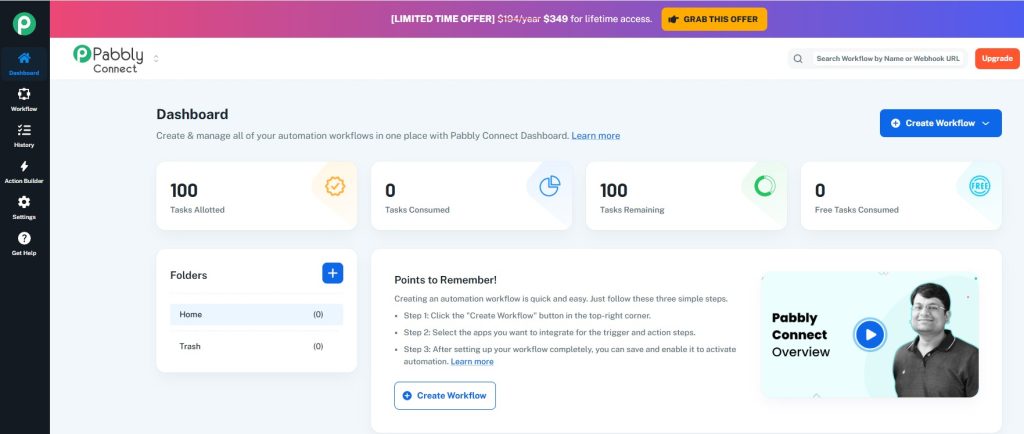
4. Pabbly Connect

Pabbly Connect has gained popularity among small businesses thanks to its affordable pricing model and generous automation limits.

Many users initially discover Pabbly because of its lifetime deals, which can provide significant long-term savings compared to subscription-based competitors.

Key Features

  • Multi-step workflows
  • App integrations
  • Webhooks
  • Data transfer automation
  • Scheduling tools

Pros

  • Budget-friendly
  • Good value for money
  • Simple setup process

Cons

  • Smaller ecosystem than Zapier
  • Interface feels less modern

Best For

Budget-conscious small businesses and solopreneurs.

5. Integrately

Integrately is designed for businesses that want automation without complexity.

While platforms like Make provide extensive customization, Integrately focuses on getting workflows running as quickly as possible.

Its library includes thousands of ready-made automations that users can activate with minimal setup.

For small businesses that don’t have time to build workflows from scratch, this simplicity can be a major advantage.

Key Features

  • One-click automation templates
  • Multi-app integrations
  • Prebuilt workflows
  • Easy setup process
  • Beginner-friendly interface

Pros

  • Very easy to learn
  • Fast deployment
  • Minimal technical knowledge required

Cons

  • Less flexible than Make
  • Fewer advanced workflow options

Best For

  • Beginners
  • Small teams
  • Business owners new to automation

6. Microsoft Power Automate

Microsoft Power Automate is part of the Microsoft ecosystem and integrates deeply with Microsoft 365 products.

For businesses already using Outlook, Teams, SharePoint, and Excel, Power Automate can be a natural choice.

The platform supports cloud workflows, desktop automation, AI-powered actions, and enterprise-grade security.

Key Features

  • Microsoft 365 integration
  • Cloud automation
  • Desktop automation
  • AI Builder
  • Enterprise security controls

Pros

  • Excellent Microsoft integration
  • Strong security
  • Enterprise-level capabilities

Cons

  • Can be difficult for beginners
  • Less intuitive than Relay or Zapier

Best For

  • Microsoft 365 users
  • Professional services firms
  • Businesses already invested in Microsoft products

7. n8n

n8n has become one of the most popular open-source workflow automation platforms.

Unlike many commercial tools, n8n allows businesses to self-host their automation infrastructure and maintain full control over their data.

This flexibility has made it especially popular among developers and technical teams.

Key Features

  • Open-source platform
  • Self-hosting support
  • API integrations
  • Advanced workflow logic
  • Custom scripting

Pros

  • Highly flexible
  • Cost-effective at scale
  • Strong developer community

Cons

  • Requires technical knowledge
  • Less beginner-friendly

Best For

  • Developers
  • Technical teams
  • Businesses requiring data ownership

8. ClickUp

ClickUp is more than a project management platform—it also includes powerful workflow automation features for small businesses. Users can automate recurring tasks, status changes, notifications, approvals, and team assignments without coding.

Best For

  • Project management
  • Team collaboration
  • Task automation

Key Features

  • No-code workflow automation
  • Custom automations
  • Task dependencies
  • AI assistant
  • Time tracking

Pros

  • Excellent all-in-one workspace
  • Easy automation builder
  • Affordable pricing

Cons

  • Advanced features require paid plans

Rating

⭐⭐⭐⭐☆


9. Airtable

Airtable combines spreadsheets with databases, making it an excellent choice for businesses that need flexible data management and workflow automation.

Best For

  • Content management
  • CRM
  • Marketing teams

Key Features

  • Database automation
  • AI-powered fields
  • Forms
  • Automations
  • Integrations

Pros

  • Extremely flexible
  • Beginner-friendly
  • Great templates

Cons

  • Can become expensive as your team grows

Rating

⭐⭐⭐⭐☆


10. Monday.com

Monday.com helps small businesses automate repetitive project management tasks while improving collaboration between teams.

Best For

  • Team collaboration
  • Operations
  • Marketing

Key Features

  • Workflow automations
  • Dashboards
  • AI assistant
  • CRM
  • Project management

Pros

  • Beautiful interface
  • Easy to learn
  • Strong automation features

Cons

  • Pricing increases with larger teams

Rating

⭐⭐⭐⭐☆


11. Zoho Flow

Zoho Flow allows businesses to connect apps and automate workflows without writing code.

It integrates particularly well with the Zoho ecosystem while also supporting hundreds of third-party applications.

Best For

  • Zoho users
  • CRM automation
  • Business workflows

Key Features

  • Drag-and-drop builder
  • Conditional workflows
  • Webhooks
  • Multi-step automations

Pros

  • Excellent Zoho integration
  • Affordable
  • Easy setup

Cons

  • Smaller integration library than Zapier

Rating

⭐⭐⭐⭐☆


12. Kissflow

Kissflow is designed for businesses looking to automate approvals, HR processes, procurement, and internal workflows.

Best For

  • HR
  • Finance
  • Enterprise workflows

Key Features

  • Process automation
  • Forms
  • Approval workflows
  • No-code builder
  • Analytics

Pros

  • Business-friendly interface
  • Strong approval workflows
  • Scalable

Cons

  • Better suited to medium and large businesses

Rating

⭐⭐⭐⭐☆


Common Automation Use Cases for Small Businesses

Many business owners understand that automation can save time, but they’re not always sure where to start.

Here are some of the most common ways small businesses use automation software.

Lead Management

Automation can instantly:

  • Capture leads from forms
  • Update CRM records
  • Notify sales teams
  • Send welcome emails

This ensures every lead receives attention quickly.

Customer Support

Businesses can automate:

  • Ticket routing
  • Customer notifications
  • Follow-up emails
  • FAQ responses

This improves response times while reducing support workloads.

Marketing Automation

Automation platforms can:

  • Schedule campaigns
  • Segment audiences
  • Send email sequences
  • Generate reports

Marketing teams often save dozens of hours each month through automation.

Internal Operations

Many businesses automate:

  • Employee onboarding
  • Expense approvals
  • Meeting scheduling
  • Document management

As businesses grow, these efficiencies become increasingly important.

For a broader overview, read our guide to AI Process Automation Tools.


How to Choose the Right Automation Software

Not every automation platform is built for the same audience.

Before choosing a solution, consider the following factors.

Ease of Use

If your team has limited technical experience, simplicity matters.

Relay.app and Zapier generally provide the easiest learning experience.

Integrations

Make sure your chosen platform connects with the tools you already use.

Popular integrations include:

  • Gmail
  • Slack
  • Shopify
  • HubSpot
  • Notion
  • Salesforce

AI Capabilities

AI-powered workflows are becoming increasingly valuable.

Look for features such as:

  • AI-generated summaries
  • Content generation
  • Intelligent routing
  • Data classification

Pricing

Choose a platform that fits both your current needs and future growth plans.

Scalability

The best automation software should grow alongside your business.

You may also want to compare additional platforms in our guide to Best Workflow Automation Software.


Which Automation Software Is Best for Small Businesses?

The best platform depends on your business goals.

Choose Relay.app if:

  • You want AI-powered workflows
  • You value simplicity
  • Your team collaborates frequently
  • You want modern workflow management

Choose Zapier if:

  • You need the largest integration ecosystem

Choose Make if:

  • You require advanced workflow customization

Choose Pabbly Connect if:

  • Budget is your primary concern

Choose n8n if:

  • You want open-source flexibility

If you’re still evaluating platforms, check our guide to AI Automation Platform.

If your primary goal is automating workflows between apps and business processes, our Best Workflow Automation Software guide provides a deeper comparison of the top workflow platforms available in 2026.


Frequently Asked Questions

What is the best automation software for small businesses?

Relay.app is our top recommendation for most small businesses because it combines AI-powered workflow automation with an intuitive interface and affordable pricing.

Why should small businesses use automation software?

Automation software helps eliminate repetitive tasks, reduce manual errors, improve productivity, and free up time for higher-value work.

Is automation software expensive?

Not necessarily. Many platforms, including Relay.app, Zapier, Make, and ClickUp, offer free plans or affordable pricing for small businesses.

What’s the difference between workflow automation and business automation?

Workflow automation focuses on automating specific tasks and processes, while business automation covers multiple departments and business operations.

Read our Business Automation Software guide.

Which automation software is easiest to use?

Relay.app, Zapier, and Integrately are among the easiest platforms for beginners thanks to their user-friendly interfaces and ready-made templates.


Final Verdict

Small businesses face constant pressure to do more with limited resources.

Automation software helps solve this challenge by eliminating repetitive tasks, reducing errors, and improving operational efficiency.

While every platform on this list has strengths, the best choice ultimately depends on your business needs.

If you’re looking for a modern platform that combines workflow automation, collaboration, and AI-powered capabilities, Relay.app stands out as one of the strongest options available in 2026.

Businesses focused on integrations may prefer Zapier, while advanced users may gravitate toward Make or n8n.

Not sure if Relay is the right choice for your business? Read Is Relay App Worth It?

AI Process Automation Software: 7 Best Tools for Businesses (2026)

0
AI Process Automation Software

Businesses are constantly looking for ways to improve efficiency, reduce costs, and eliminate repetitive work. Whether you’re managing customer support, processing invoices, updating CRM records, or handling internal approvals, manual processes can quickly become a bottleneck.

This is where AI process automation software comes in.

Modern automation platforms combine workflow automation with artificial intelligence to streamline business operations. Instead of relying on employees to perform repetitive tasks, businesses can automate processes and allow teams to focus on higher-value work.

In this guide, we’ll compare the best AI process automation software solutions in 2026, including their features, pros, cons, and ideal use cases.

If you’re new to automation, check our guide to AI Automation Tools.


What Is AI Process Automation Software?

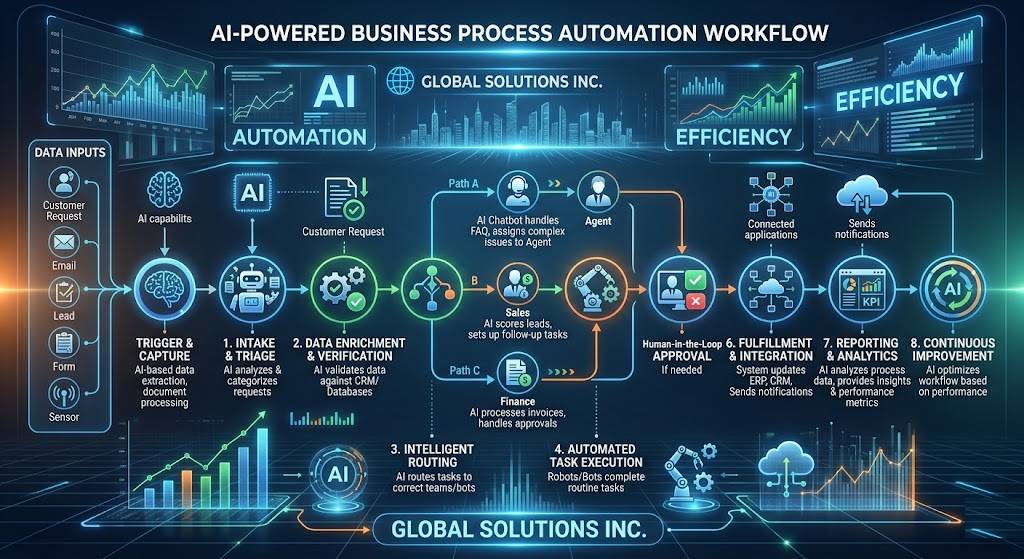
AI business process automation workflow

AI process automation software helps businesses automate repetitive workflows using triggers, rules, integrations, and artificial intelligence.

Examples include:

  • Automatically routing support tickets
  • Updating CRM records
  • Sending follow-up emails
  • Generating reports
  • Processing invoices
  • Managing employee onboarding
  • Synchronizing data across applications

Unlike traditional automation tools, AI-powered platforms can analyze information, summarize content, classify data, and make intelligent decisions before triggering actions.

As AI technology continues to improve, automation software is becoming a critical part of modern business operations.

Looking for a broader overview of automation solutions? Check our guide to AI Process Automation Tools to explore additional platforms and use cases.


Why Businesses Are Investing in Process Automation

[CHÈN ẢNH: team using workflow automation software]

Alt text: benefits of process automation software

Businesses invest in automation software because it delivers measurable benefits.

Key advantages include:

Increased Productivity

Employees spend less time on repetitive tasks and more time on strategic work.

Reduced Human Error

Automated workflows eliminate many manual mistakes that occur when handling data or moving information between systems.

Faster Operations

Tasks that once took hours can often be completed in seconds.

Lower Operating Costs

Automation reduces the need for manual labor and improves efficiency.

Better Customer Experience

Automated responses and faster processes lead to higher customer satisfaction.

For many organizations, automation software quickly pays for itself through time savings alone.


1. Relay.app

Relay app AI workflow automation

Relay.app is one of the most modern workflow automation platforms available today.

Designed with simplicity in mind, Relay combines automation, collaboration, and AI-powered workflow steps in a beginner-friendly interface.

Key Features

  • Visual workflow builder
  • AI-powered automation actions
  • Human approval steps
  • Team collaboration
  • Gmail integration
  • Slack integration
  • Notion integration
  • Multi-step workflows

Pros

  • Easy to use
  • Excellent workflow visualization
  • Strong AI capabilities
  • Great for teams

Cons

  • Fewer integrations than Zapier
  • Smaller ecosystem

Best For

Small businesses, agencies, startups, and teams looking for AI-powered workflow automation.

Read our full Relay App Review.


2. Zapier

Zapier workflow software

Zapier remains one of the largest automation platforms on the market.

Its biggest advantage is its massive integration ecosystem, allowing users to connect thousands of applications without coding.

Key Features

  • Thousands of app integrations
  • Multi-step workflows
  • AI-powered automation
  • Webhooks
  • API support

Pros

  • Huge integration library
  • Reliable platform
  • Easy setup

Cons

  • Can become expensive
  • Advanced workflows may require higher plans

Best For

Businesses that rely on a large number of third-party applications.

Looking for alternatives? Check our guide to Best Zapier Alternatives.


3. Make

Make workflow automation

Make is a powerful workflow automation platform that offers more flexibility than many competitors.

Its visual scenario builder allows users to create highly customized workflows.

Key Features

  • Visual workflow builder
  • Advanced logic
  • Data transformation tools
  • API integrations
  • Scheduling tools

Pros

  • Highly flexible
  • Competitive pricing
  • Strong automation capabilities

Cons

  • Learning curve for beginners

Best For

Power users and technical teams.

Compare the platforms in our Relay App vs Make guide.


4. Microsoft Power Automate

Microsoft Power Automate is designed for businesses already using Microsoft 365 products.

Key Features

  • Microsoft ecosystem integration
  • Cloud workflows
  • Desktop automation
  • AI Builder
  • Enterprise security

Pros

  • Excellent Microsoft integration
  • Enterprise-grade security
  • Strong support

Cons

  • Can be complex
  • Less intuitive for beginners

Best For

Organizations heavily invested in Microsoft’s ecosystem.


5. UiPath

UiPath RPA dashboard

UiPath is one of the leaders in robotic process automation (RPA).

The platform is widely used by enterprises to automate large-scale business operations.

Key Features

  • Robotic process automation
  • AI document processing
  • Enterprise workflow management
  • Process mining

Pros

  • Enterprise-ready
  • Highly scalable
  • Advanced automation capabilities

Cons

  • Expensive
  • More complex than SMB-focused tools

Best For

Large enterprises.


6. Workato

Workato automation software

Workato combines workflow automation, integrations, and AI-powered processes.

It is popular among growing companies that need advanced automation without building everything from scratch.

Pros

  • Strong integrations
  • Enterprise features
  • AI capabilities

Cons

  • Premium pricing

Best For

Mid-sized and enterprise businesses.


7. Automation Anywhere

Automation Anywhere focuses on enterprise automation and robotic process automation.

Pros

  • Enterprise-grade platform
  • AI-powered automation
  • Strong governance features

Cons

  • Expensive for smaller businesses

Best For

Large organizations managing complex workflows.


AI Process Automation Software Comparison

ToolBest ForEase of UseAI Features
Relay.appSmall businessesExcellentStrong
ZapierIntegrationsExcellentGood
MakeAdvanced workflowsMediumGood
Power AutomateMicrosoft usersMediumGood
UiPathEnterprise RPAMediumStrong
WorkatoGrowing companiesMediumStrong
Automation AnywhereEnterprise automationMediumStrong

Which AI Process Automation Software Is Best?

The right platform depends on your business needs.

Choose Relay.app if:

  • You want simplicity
  • You need AI workflow automation
  • You value collaboration

Choose Zapier if:

  • You need the largest integration ecosystem

Choose Make if:

  • You want advanced workflow customization

Choose UiPath or Automation Anywhere if:

  • You need enterprise-level automation

You may also like our guide to AI Workflow Software Comparison.


Frequently Asked Questions

What is AI process automation software?

AI process automation software automates repetitive business tasks using workflows, integrations, and artificial intelligence.

What is the best AI process automation software?

Popular options include Relay.app, Zapier, Make, UiPath, and Workato.

Is process automation software worth it?

Yes. Businesses often save significant time and reduce errors by automating repetitive workflows.

Can small businesses use automation software?

Absolutely. Many modern automation tools are designed specifically for small businesses and startups.


Final Verdict

AI process automation software has become essential for modern businesses.

The right platform can help teams reduce repetitive work, improve efficiency, and scale operations without increasing headcount.

While enterprise organizations may prefer solutions like UiPath or Automation Anywhere, many small and mid-sized businesses will find that Relay.app offers one of the best combinations of ease of use, AI capabilities, and workflow flexibility.

If you’re looking for a modern automation platform in 2026, Relay.app is a great place to start.

Read our guide on Is Relay App Worth It?

Relay.app vs Pabbly Connect (2026): Which Automation Tool Is Better?

4
Relay.app vs Pabbly Connect (2026)

Workflow automation tools can save businesses hours of repetitive work every week.

Two popular options in 2026 are Relay.app and Pabbly Connect.

But which platform is actually better for automation workflows?

In this guide, we compare Relay.app vs Pabbly Connect based on ease of use, pricing, integrations, AI automation, and workflow flexibility.

If you’re exploring more automation platforms, check our guide to Best AI Workflow Automation Tools.


What Is Relay.app?

Relay app AI automation platform

Relay.app is a modern AI-powered workflow automation platform designed for businesses and teams.

Key features include:

  • Visual workflow builder
  • AI-powered automation steps
  • Human approval workflows
  • Team collaboration tools
  • Easy workflow setup

Relay focuses on simplicity while still offering advanced automation capabilities.

Read our full Relay App Review.


What Is Pabbly Connect?

Pabbly Connect automation software

Pabbly Connect is an automation platform known for its affordable pricing and lifetime deals.

Key features:

  • App integrations
  • Workflow automation
  • Multi-step automations
  • Webhook support

It’s especially popular among freelancers and small businesses looking for budget-friendly automation.


Relay.app vs Pabbly Connect: Ease of Use

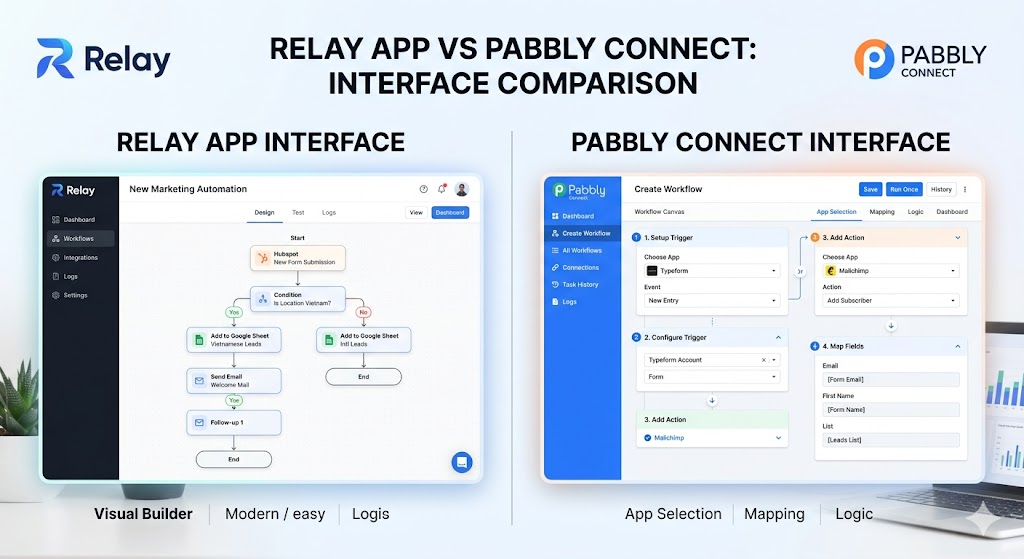
Relay app vs Pabbly Connect interface

Relay.app has a cleaner and more modern interface.

Its visual workflow builder is easier for beginners and teams to understand.

Pabbly Connect works well but can feel more technical and outdated compared to newer AI-first tools.

Winner:

  • Relay.app for user experience
  • Pabbly Connect for simpler budget automation

Relay.app vs Pabbly Connect: AI Features

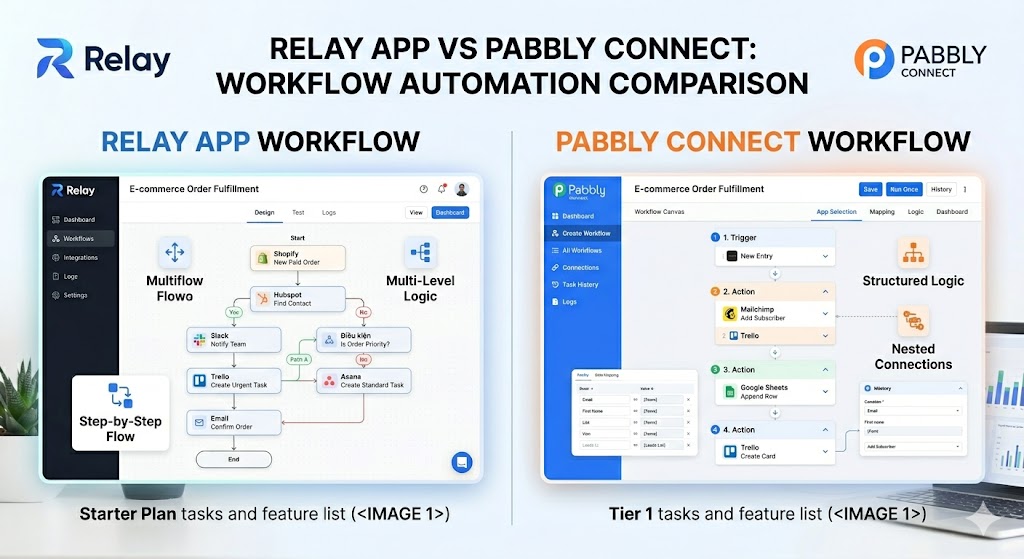
Relay.app focuses heavily on AI-powered workflows and collaborative automation.

Pabbly Connect mainly focuses on traditional app automation and integrations.

If AI automation is important for your business, Relay.app has the advantage.

You may also like our AI Workflow Software Comparison guide.


Relay.app vs Pabbly Connect: Pricing

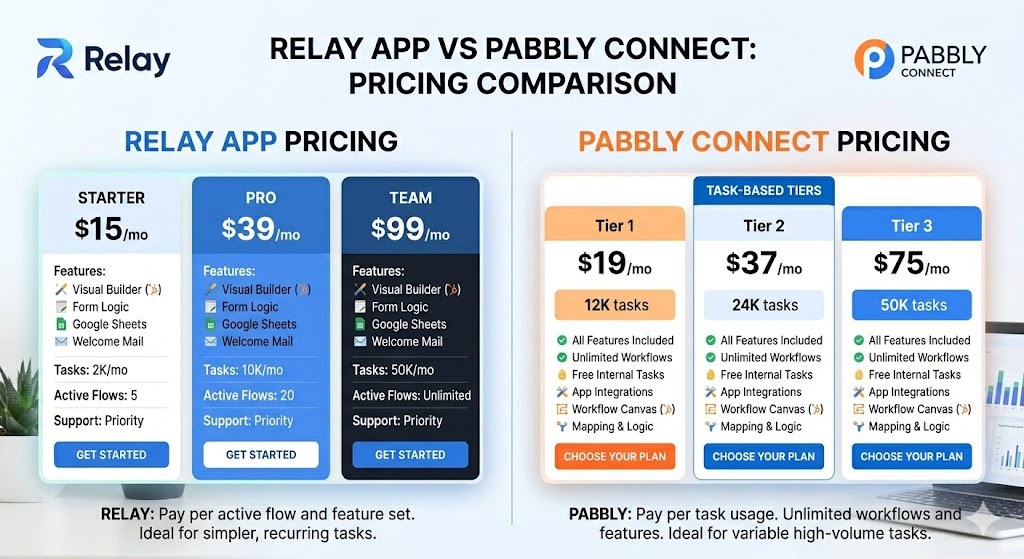
Relay app vs Pabbly pricing

Pabbly Connect is generally cheaper, especially for users interested in lifetime deals.

Relay.app may cost more depending on workflow usage, but it provides:

  • Better collaboration
  • Easier workflow management
  • More modern AI features

You can also read:
Is Relay App Worth It?


Which Automation Tool Should You Choose?

Choose Relay.app if:

  • You want AI-powered workflows
  • You need collaboration features
  • You prefer modern UX

Choose Pabbly Connect if:

  • Budget is your main concern
  • You want basic automation
  • You prefer lifetime deals

Final Verdict

Both tools are solid automation platforms—but they target different users.

For businesses wanting modern AI workflow automation, Relay.app is the stronger option in 2026.

For budget-conscious users focused on simple automations, Pabbly Connect remains a good alternative.

Relay.app vs n8n (2026): Which Automation Tool Is Better?

0
Relay.app vs n8n

Choosing the right automation platform can dramatically improve your workflows and productivity.

Two increasingly popular options are Relay.app and n8n.

But which one is actually better in 2026?

In this guide, we compare Relay.app vs n8n based on features, ease of use, integrations, pricing, and AI workflow capabilities.

If you’re new to AI workflow tools, check our guide to Best AI Workflow Automation Tools.


What Is Relay.app?

Relay app AI automation platform

Relay.app is a modern AI-powered workflow automation platform designed for teams and businesses.

Key features include:

  • Visual workflow builder
  • AI-powered automation steps
  • Human approval workflows
  • Team collaboration
  • Beginner-friendly interface

Read our full Relay App Review.


What Is n8n?

n8n is an open-source workflow automation platform focused on flexibility and customization.

It’s especially popular among developers and technical users.

Key features:

  • Self-hosting support
  • Advanced customization
  • Open-source flexibility
  • Large integration ecosystem

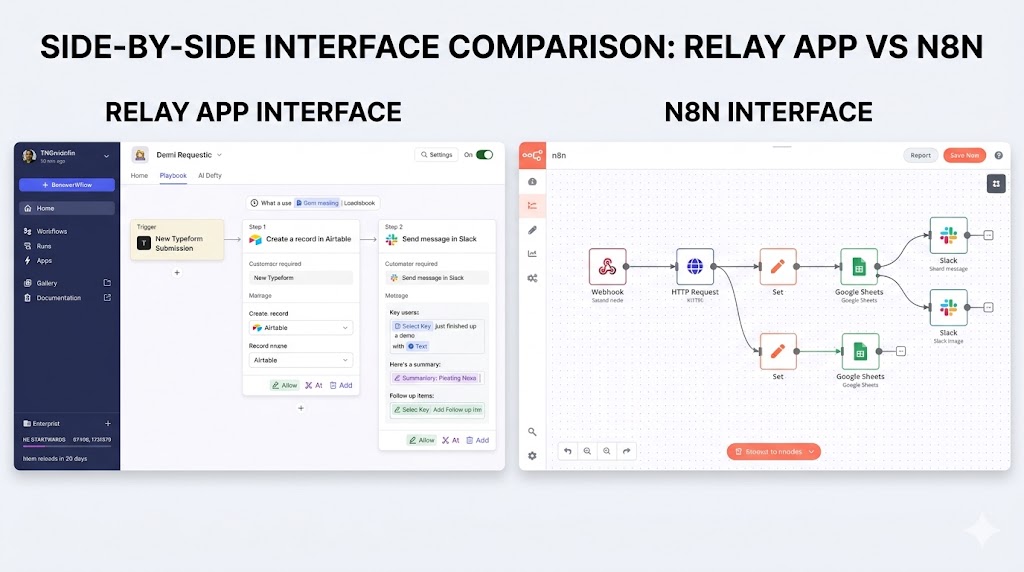
Relay.app vs n8n: Ease of Use

Relay app vs n8n interface

Relay.app is much easier for beginners.

Its clean interface and visual workflow builder make automation more accessible for non-technical users.

n8n offers more flexibility—but it comes with a steeper learning curve.

Winner:

  • Relay.app for simplicity
  • n8n for advanced technical control

Relay.app vs n8n: AI Features

Relay.app focuses heavily on AI-powered workflows and collaborative automation.

n8n supports AI integrations too, but setup is often more technical.

For most businesses looking for easy AI workflow automation, Relay.app has an advantage.

Read more in our AI Workflow Software Comparison guide.


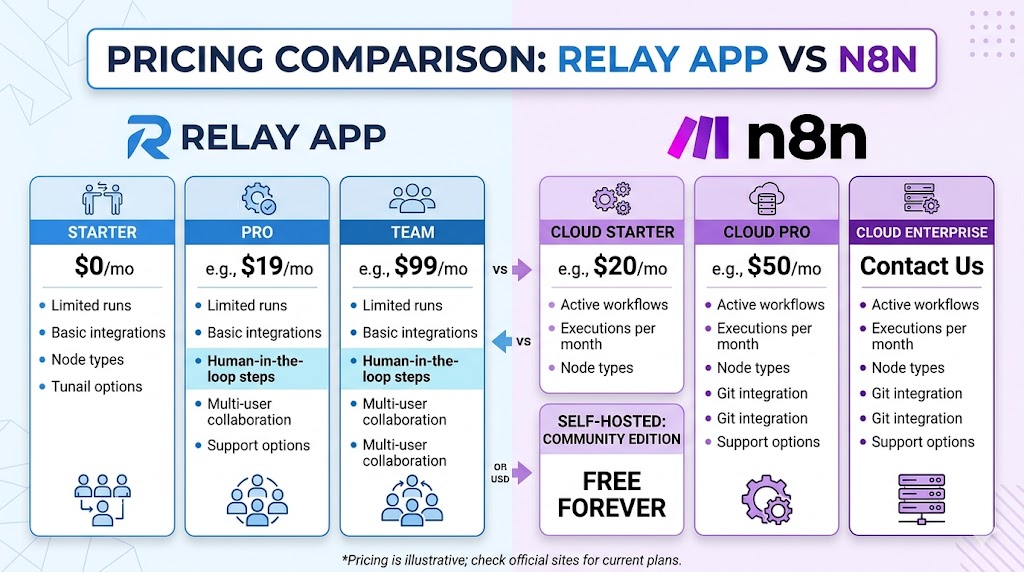
Relay.app vs n8n: Pricing

Relay app vs n8n pricing

n8n can be cheaper if self-hosted.

However, Relay.app may provide better value for teams that want:

  • Faster setup
  • Easier collaboration
  • Less technical maintenance

You can also check whether Relay App is worth it.


Which Automation Tool Should You Choose?

Choose Relay.app if:

  • You want easy AI automation
  • You prefer visual workflows
  • You need team collaboration

Choose n8n if:

  • You are technical
  • You want self-hosting
  • You need advanced customization

Final Verdict

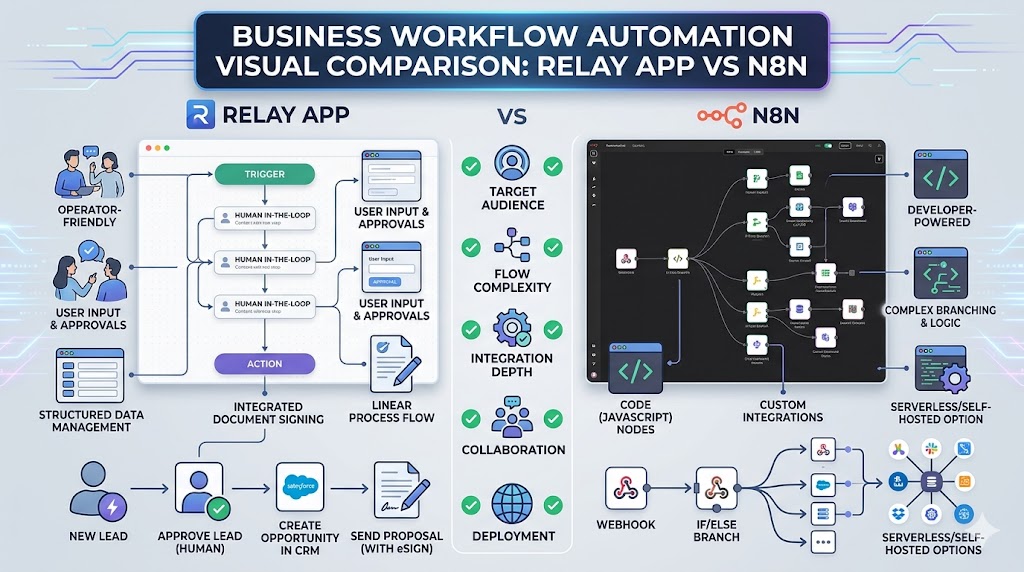
Relay app vs n8n comparison

Both tools are excellent—but they serve different audiences.

For most businesses and beginners, Relay.app is the better choice in 2026 thanks to its ease of use and AI-first workflow design.

For developers and advanced users, n8n remains a powerful open-source alternative.

5 Best AI Workflow Automation Tools in 2026

1
5 Best AI Workflow Automation Tools

AI workflow automation tools help businesses save time, reduce repetitive work, and improve productivity.

From AI-powered workflows to advanced app integrations, today’s automation tools are smarter than ever.

In this guide, we compare the best AI workflow automation tools in 2026 for businesses, creators, and teams.

If you’re new to automation, check our full guide to AI Automation Tools.


What Are AI Workflow Automation Tools?

AI workflow automation tools connect apps and automate processes using triggers, conditions, and artificial intelligence.

Common use cases include:

  • Automating emails
  • Managing leads
  • AI-generated summaries
  • Workflow approvals
  • Content publishing
  • CRM updates

These tools help businesses automate tasks that normally require manual work.


1. Relay.app — Best Modern AI Workflow Tool

[CHÈN ẢNH: Relay.app workflow dashboard]

Relay app competitor to Zapier

Relay.app is one of the most modern AI workflow automation platforms available today.

Key features include:

  • AI-powered workflow steps
  • Human approval checkpoints
  • Visual workflow builder
  • Team collaboration tools

Relay is especially good for small businesses and growing teams.

Read our full Relay App Review.

See whether Relay App is worth it.


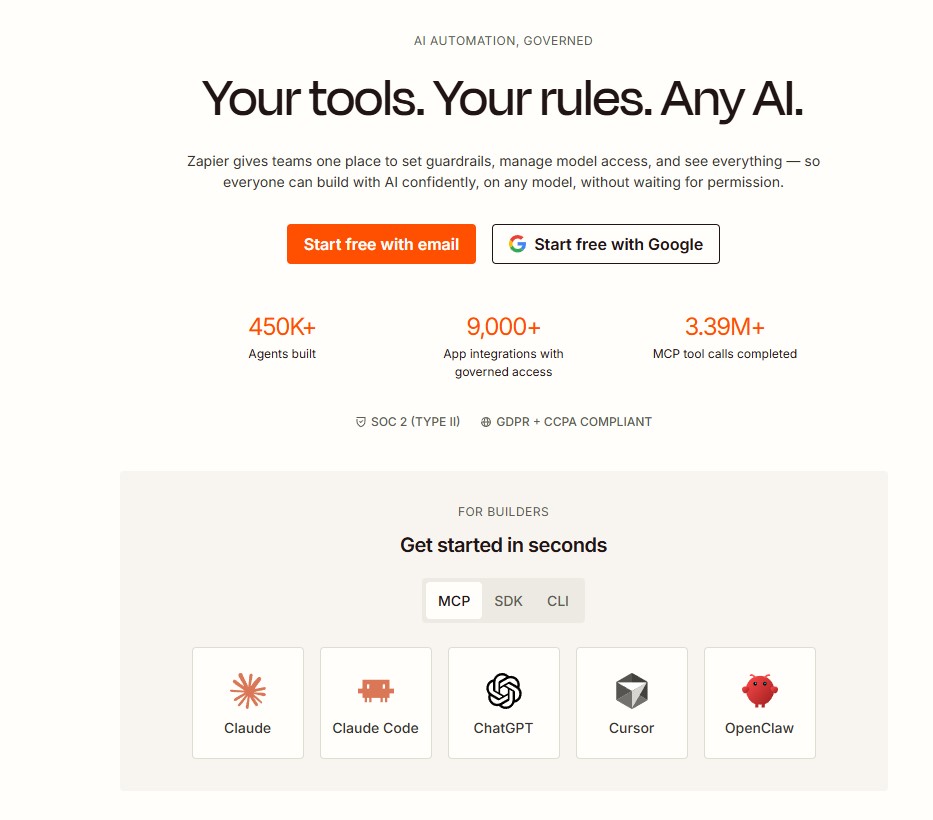
2. Zapier — Best for Integrations

Zapier remains one of the biggest workflow automation tools because of its huge integration library.

Pros:

  • Massive app support
  • Easy to use
  • Reliable workflows

Cons:

  • Can become expensive
  • AI features are still limited

Looking for alternatives? Read our guide to Zapier Competitors.


3. Make — Best for Advanced Workflows

Make gives users more flexibility and advanced workflow design options.

Best for:

  • Advanced users
  • Complex workflows
  • Visual automation building

Compare Relay App vs Make here.


4. Microsoft Power Automate

Best for companies already using Microsoft products and services.


5. n8n

n8n is a flexible open-source automation platform designed for developers and technical teams.


Which AI Workflow Automation Tool Is Best?

Quick recommendations:

  • Relay.app → best modern AI automation tool
  • Zapier → best integrations
  • Make → best advanced workflows
  • Power Automate → best for Microsoft users
  • n8n → best open-source option

You may also like our guide to AI Workflow Software Comparison.


Final Verdict

The best AI workflow automation tool depends on your business needs.

For many users in 2026, Relay.app stands out as one of the easiest and smartest workflow automation platforms available today.

AI Workflow Software Comparison (2026): Which Tool Is Best?

2

Choosing the right AI workflow software can save your team hours every week.

From simple task automation to advanced AI-powered workflows, today’s tools can automate repetitive work, connect your apps, and improve productivity.

In this AI workflow software comparison, we’ll compare the top platforms in 2026 and help you choose the best one for your needs.

If you’re new to workflow automation, start with our guide to AI Automation Tools.


What Is AI Workflow Software?

AI workflow software helps automate business processes by combining:

  • App integrations
  • Automated triggers
  • AI-powered actions
  • Human approvals
  • Multi-step workflows

Common examples include:

  • Automatically sending emails
  • Updating CRM records
  • Routing support tickets
  • Generating AI summaries
  • Moving data between apps

These tools reduce manual work and improve efficiency.


1. Relay.app — Best for Team Collaboration

Relay app AI automation platform

Relay.app is one of the most modern AI workflow platforms available today.

Its biggest strengths include:

  • Visual workflow builder
  • AI-powered workflow steps
  • Human approval checkpoints
  • Team collaboration tools

Relay is especially good for small businesses and growing teams.

Read our full Relay App Review.

See if Relay App is worth it.


2. Zapier — Best for App Integrations

Zapier remains the most popular workflow automation platform thanks to its massive app library.

Pros:

  • Thousands of integrations
  • Easy setup
  • Reliable automations

Cons:

  • Can become expensive
  • Limited collaboration features

Looking for alternatives? Check our guide to Zapier Competitors.


3. Make — Best for Advanced Workflow Design

Make automation platform

Make offers powerful visual workflow building for users who want more flexibility.

It’s ideal for:

  • Advanced automation setups
  • Multi-step logic
  • Custom data handling

Compare Relay App vs Make here.


4. Microsoft Power Automate

Best for businesses already using Microsoft tools like Teams, Excel, and SharePoint.


5. n8n

n8n is an open-source option ideal for technical users who want maximum customization.


AI Workflow Software Comparison Table

ToolBest ForEase of UseAI Features
Relay.appTeams & collaborationEasyStrong
ZapierIntegrationsVery easyMedium
MakeAdvanced workflowsMediumMedium
Power AutomateMicrosoft usersMediumMedium
n8nDevelopersHardFlexible

Which AI Workflow Tool Should You Choose?

Choose:

  • Relay.app → if you want modern AI workflow automation
  • Zapier → if you need the most integrations
  • Make → if you want advanced control
  • Power Automate → if your team uses Microsoft
  • n8n → if you want open-source flexibility

You may also like our guide to AI Process Automation Tools.


Final Verdict

The best AI workflow software depends on your business needs—but for many teams, Relay.app offers one of the best balances of simplicity, AI features, and collaboration.

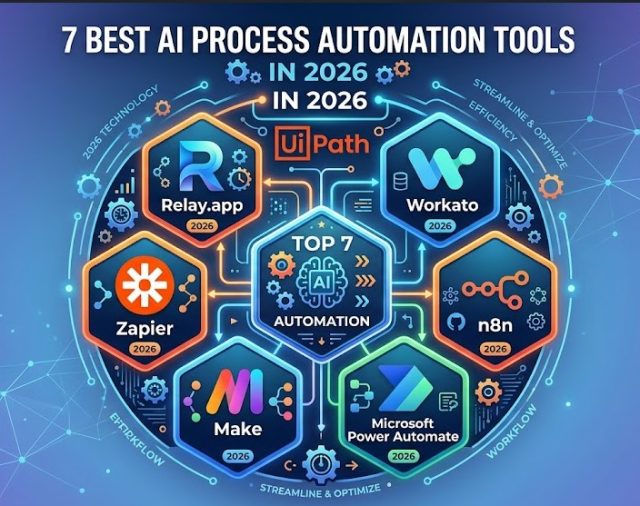
7 Best AI Process Automation Tools in 2026 (Automate Smarter)

3
7 Best AI Process Automation

Businesses are increasingly using AI process automation tools to eliminate repetitive tasks, improve efficiency, and scale operations faster.

From simple app integrations to advanced AI-powered workflows, automation tools can save hours every week.

In this guide, we compare the best AI process automation tools available in 2026.

If you’re new to this space, start with our full AI Automation Platform guide.


What Are AI Process Automation Tools?

AI process automation tools help businesses automate workflows using:

  • Artificial intelligence
  • App integrations
  • Workflow triggers
  • Human approvals
  • Decision-making logic

Common use cases include:

  • Customer support automation
  • Marketing workflows
  • Sales pipeline updates
  • Internal team approvals
  • Data syncing between apps

1. Relay.app — Best AI Process Automation Tool for Teams

Relay app AI process automation

Relay.app is one of the most promising AI-first automation platforms.

Its biggest strength is combining:

  • AI-powered automation
  • Human-in-the-loop workflows
  • Easy visual workflow building
  • Team collaboration tools

Ideal for:

  • Small businesses
  • Agencies
  • Growing teams

Read our full Relay App Review.

Learn whether Relay App is free.


2. Zapier

Zapier automation platform

Zapier remains a popular process automation tool with thousands of integrations.

However, many users are now exploring Zapier competitors because of pricing.

See our guide to Zapier Competitors.


3. Make

Make is ideal for advanced users who want more flexibility and visual workflow control.

Compare Relay App vs Make here.


4. Microsoft Power Automate

Microsoft Power Automate dashboard

Best for businesses already using Microsoft products.


5. n8n

An open-source automation platform for technical users.


Which AI Process Automation Tool Is Best?

Quick recommendations:

  • Relay.app → best AI-first option
  • Zapier → best integrations
  • Make → best advanced workflows
  • Power Automate → best for Microsoft users
  • n8n → best open-source flexibility

You can also explore our full list of Best AI Automation Tools.


Final Verdict

The right AI process automation tool can save time, reduce errors, and improve productivity.

For many teams in 2026, Relay.app is one of the best AI process automation tools available today.

Popular Posts

My Favorites

AI Voice Generator for YouTube

AI Voice Generator for YouTube (2026): Best Tools for Faceless Channels

1
Faceless YouTube channels have become one of the fastest-growing content categories online.Many creators are producing educational videos, documentaries, tutorials, news content, and storytelling channels...